The guest speaker for the January 2026 Shoreham Society talk is Paul Osborne, co-founder of www.Shorehambysea.com.
Find out more and sign up on the Shoreham Society’s website.

The history portal for Shoreham-by-Sea, Sussex, England

This blog contains articles and posts taken from the Shorehambysea.com Forum. Presented in date order of published.
Alphabetical index:
The guest speaker for the January 2026 Shoreham Society talk is Paul Osborne, co-founder of www.Shorehambysea.com.
Find out more and sign up on the Shoreham Society’s website.
Whilst the Swiss Gardens pleasure grounds were, for 70 years, the destination for fun and frivolity it had an unenviable record of hazard and danger.
1838 – not long after opening a drowning occurred of 15 year old William Booker. He was employed at the Swiss in maintenance duties. One of his responsibilities was to pump out water from the ‘floating temple’ tethered in the East Lake. On the morning of Monday 16th July 1838 he was discovered by staff drowned in the lake.

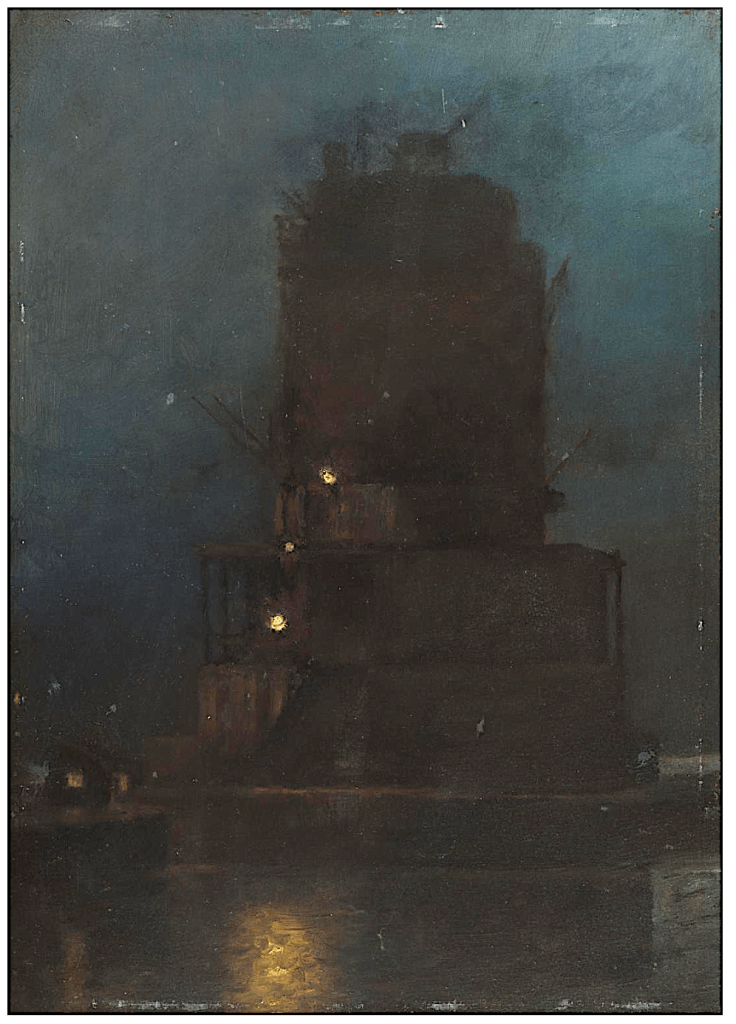
An enquiry from the Tate Gallery recently raised the question of when the above painting was painted. The Tate believed it was 1903. However if the image is enhanced it does reveal some significant details to identify the date. I’d suggest the artist was positioned at Turberville Wharf looking SW to the tower. The area at the far left of the painting is the base of tower 2, with sheds on its base – hence the light in windows (see photo below from similar position). There are also working lights on the tower – suggesting the towers were still occupied but near completed – note there are no signs of the large cranes on the land.
Continue reading “Mystery Mystery Towers painting”This 20 minute video explores some of the content on the website and demonstrates some of the features.
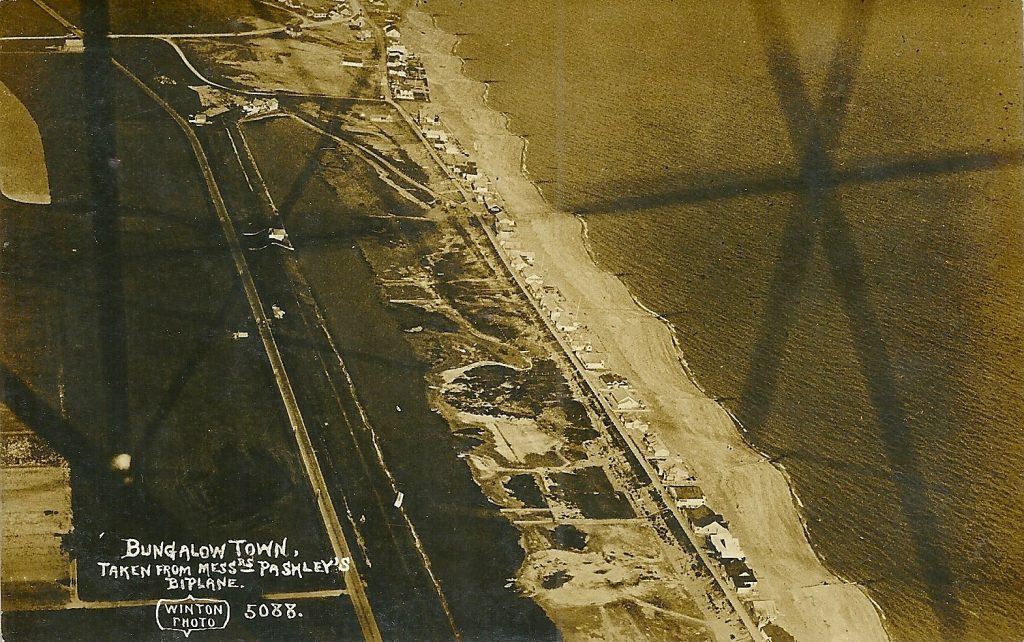
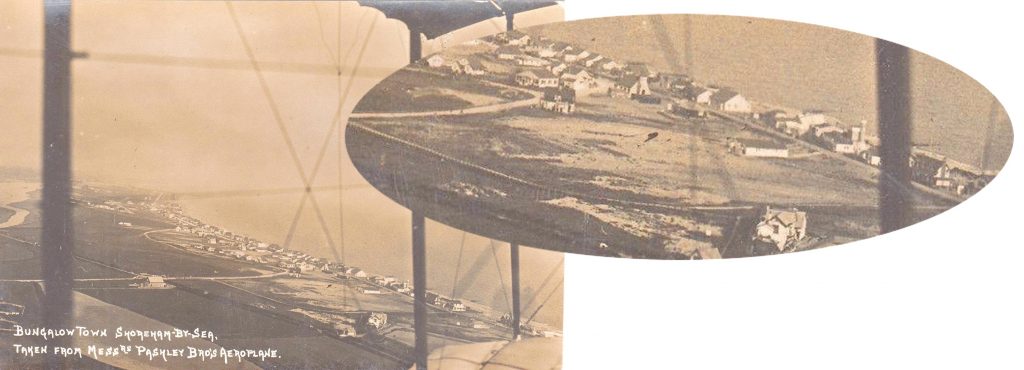
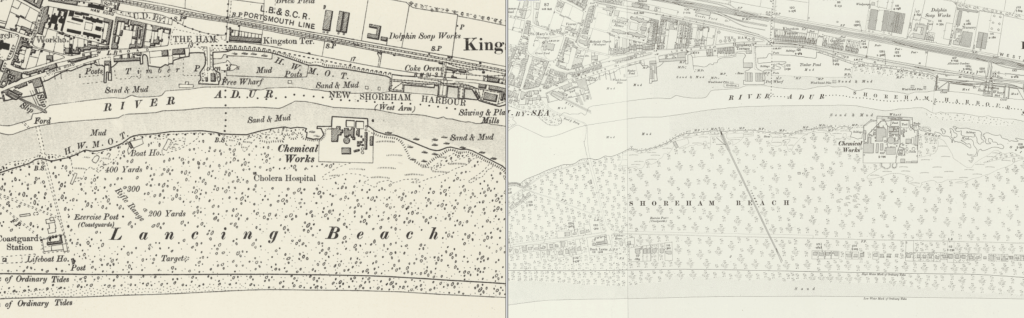
The Old Fort wasn’t considered old in 1913 – so much so that the beach road to the new bungalows was called Fort Road. The shingle spit of land in 1896 was still correctly titled Lancing Beach but by 1909 the maps showed it as Shoreham Beach. Perhaps the later title of Bungalow Town was to placate both factions… until the question of the airport name was mentioned!
This delightful photograph that is pre-1915 is of the twitten alleyway and gate at the junction of Southdown Road and Mill Lane. The field behind is Oxen Field – often used for town events and sports. The twitten was the route north to Little Buckingham, with a high flint wall on the boundary with the vicarage in Shoreham Court to the east.
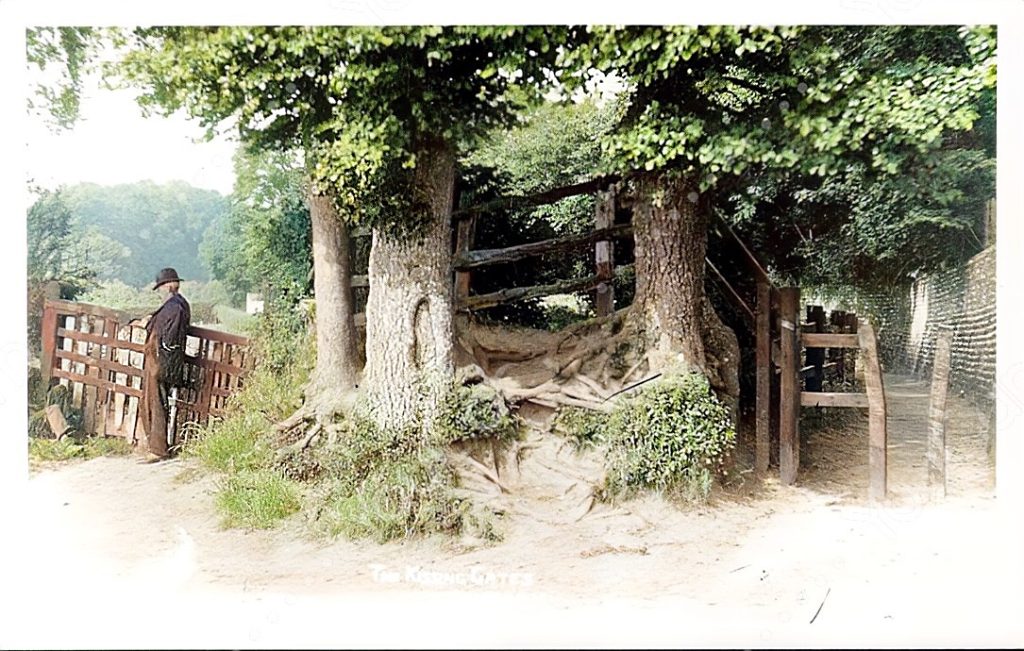
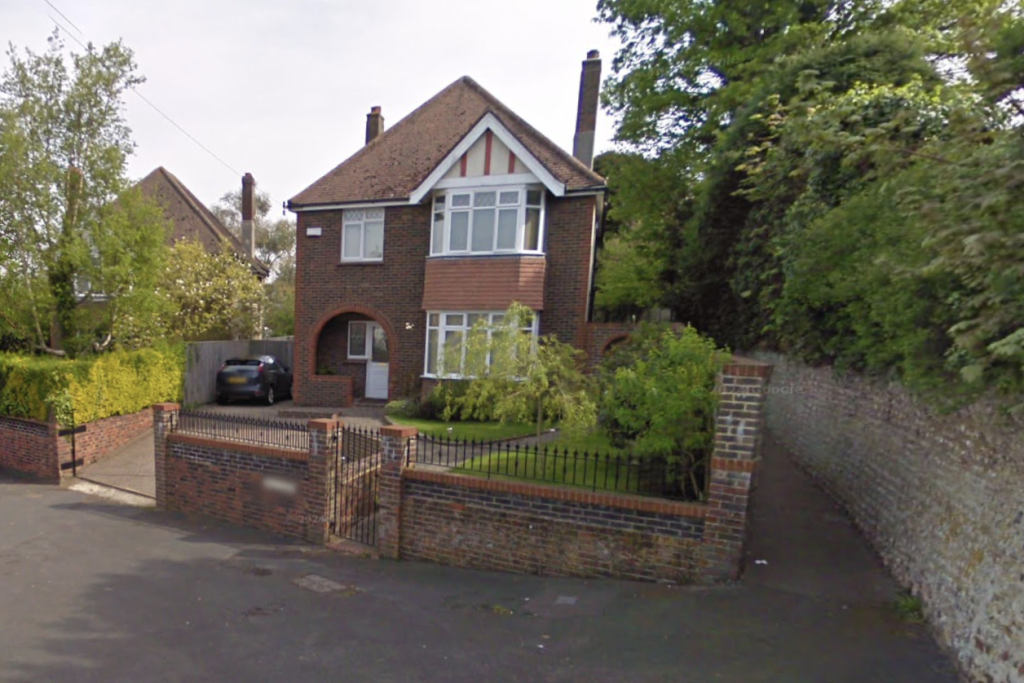
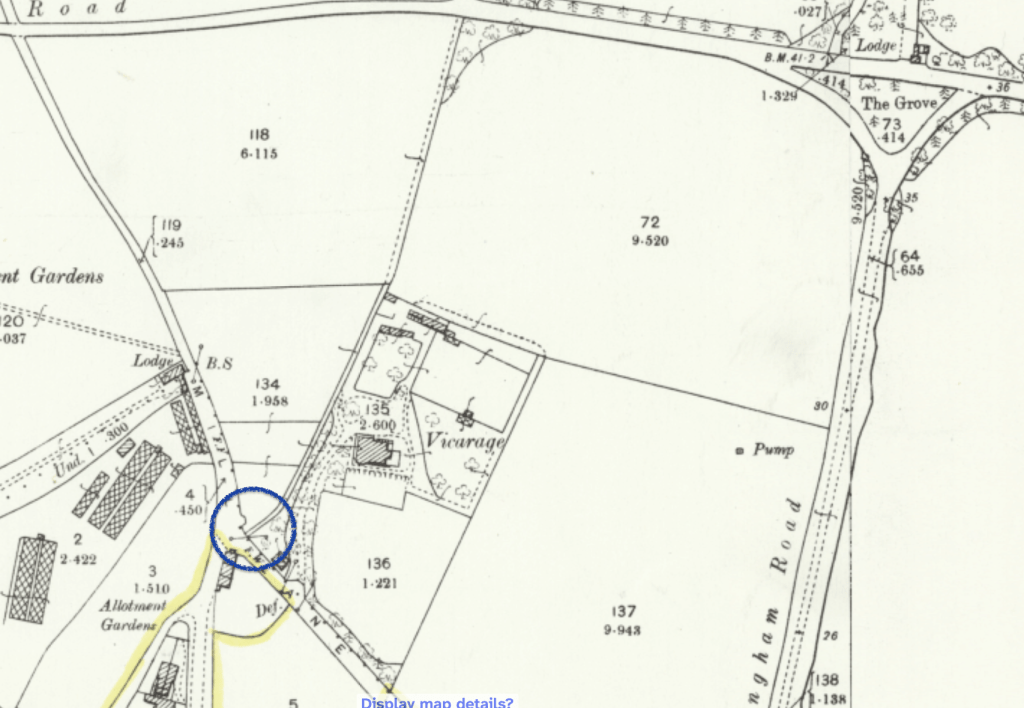
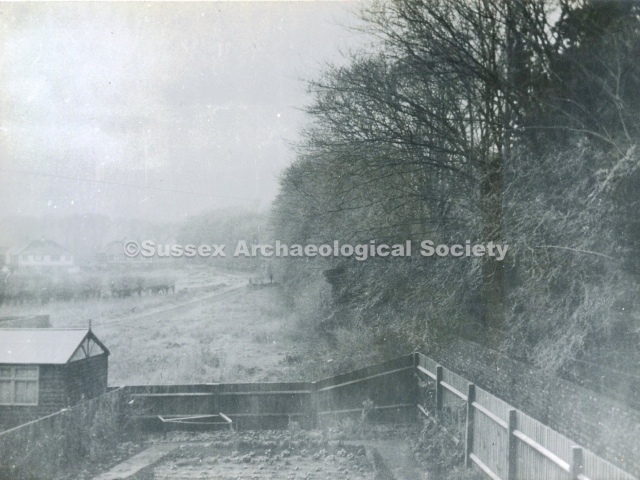
By the late 1920’s the field behind the kissing Tree was ready for redevelopment into Oxen Avenue. This view below is from the house to the left of the alleyway looking towards Upper Shoreham Road.
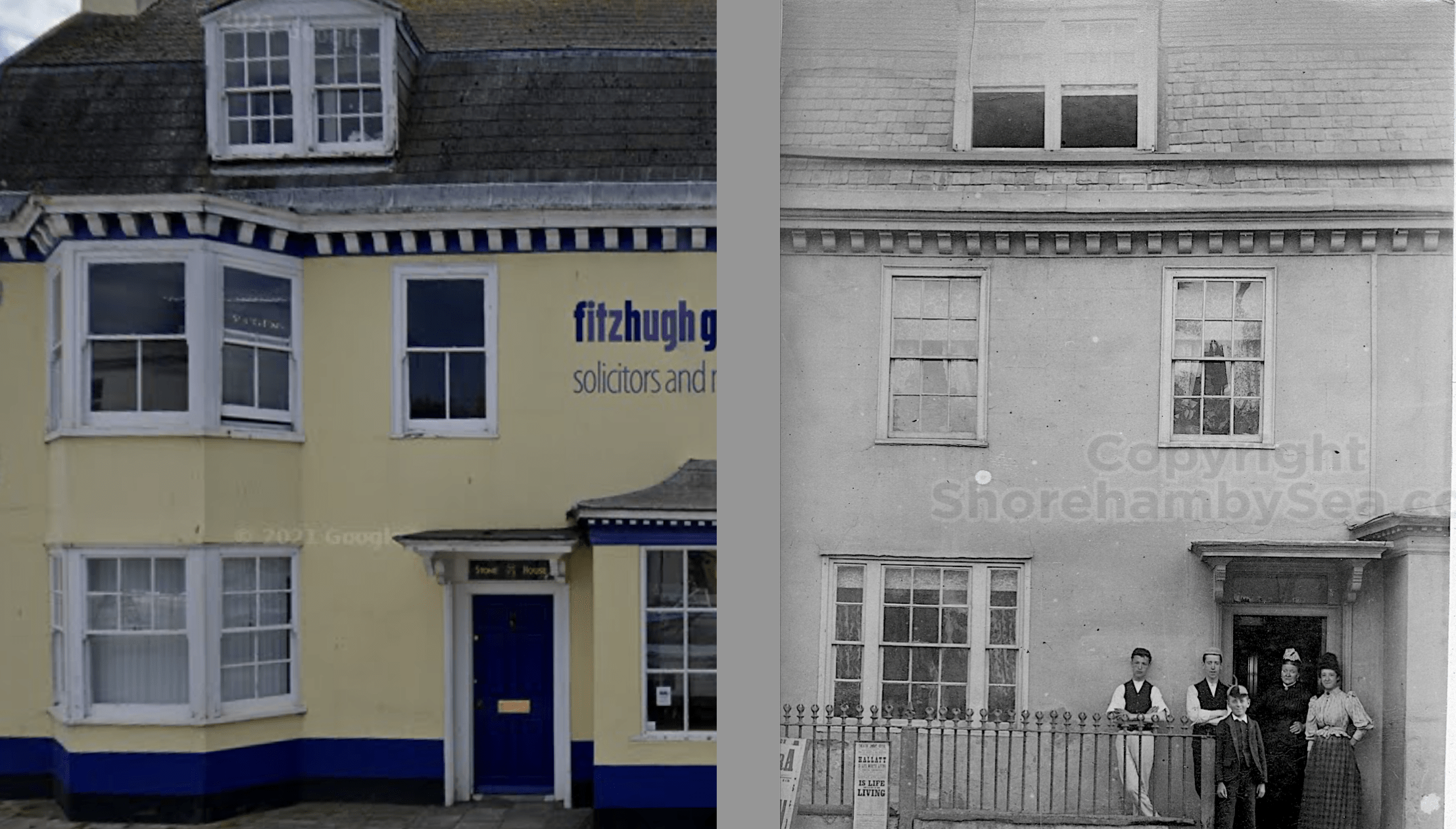

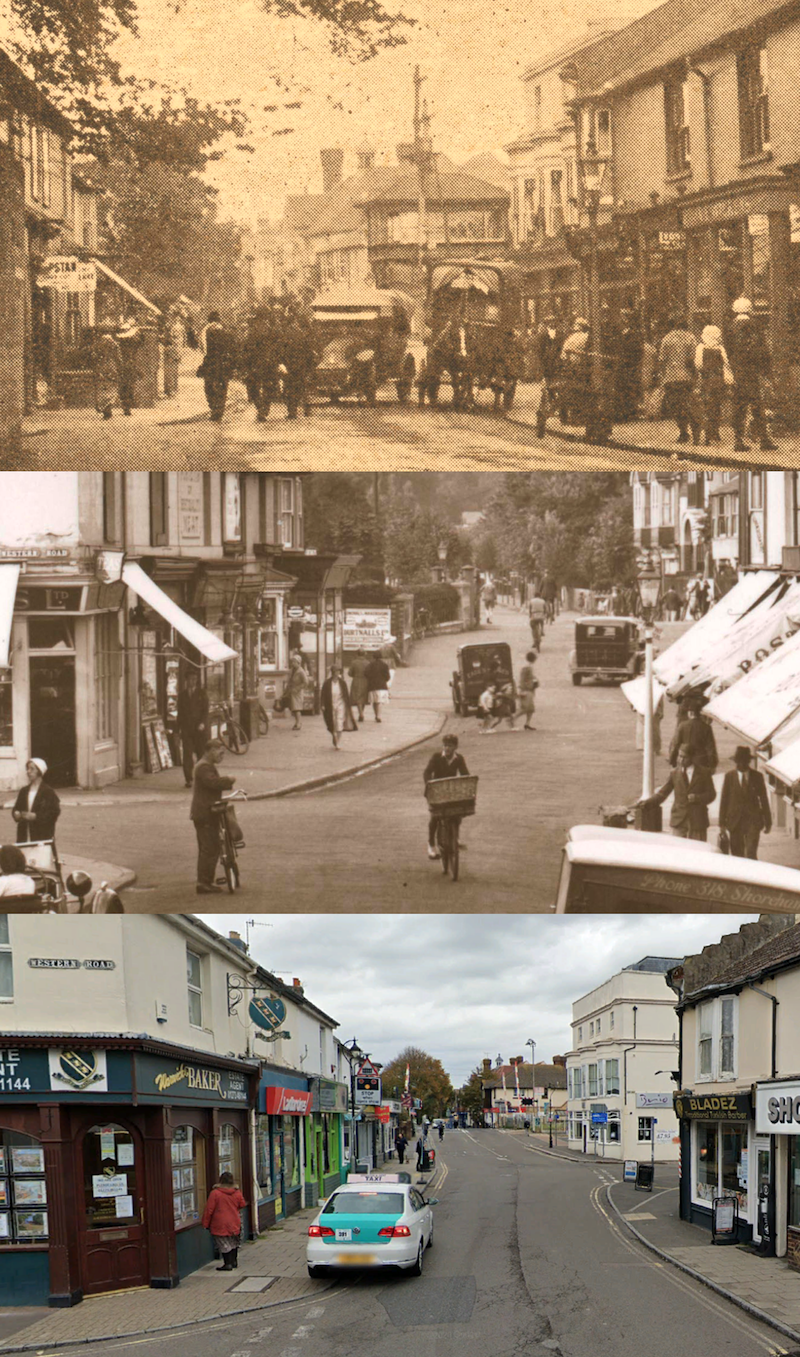
A self explanatory set of comparison photos 2020 and around 1890
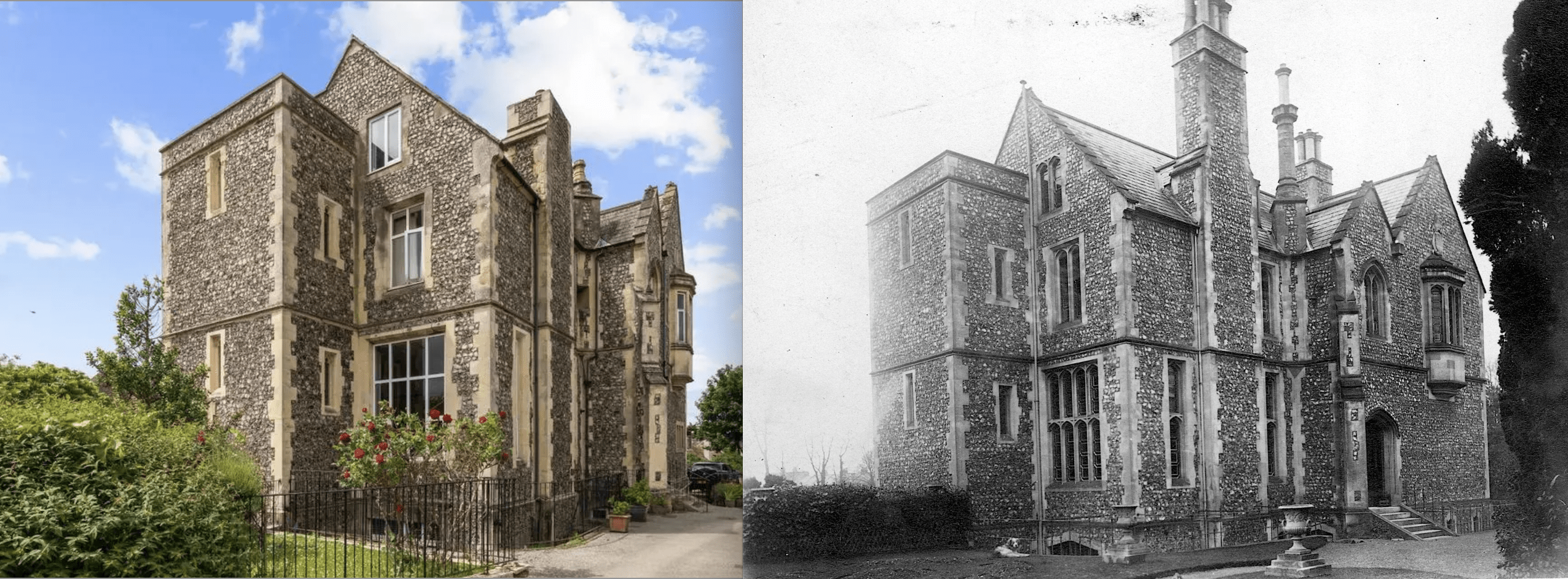
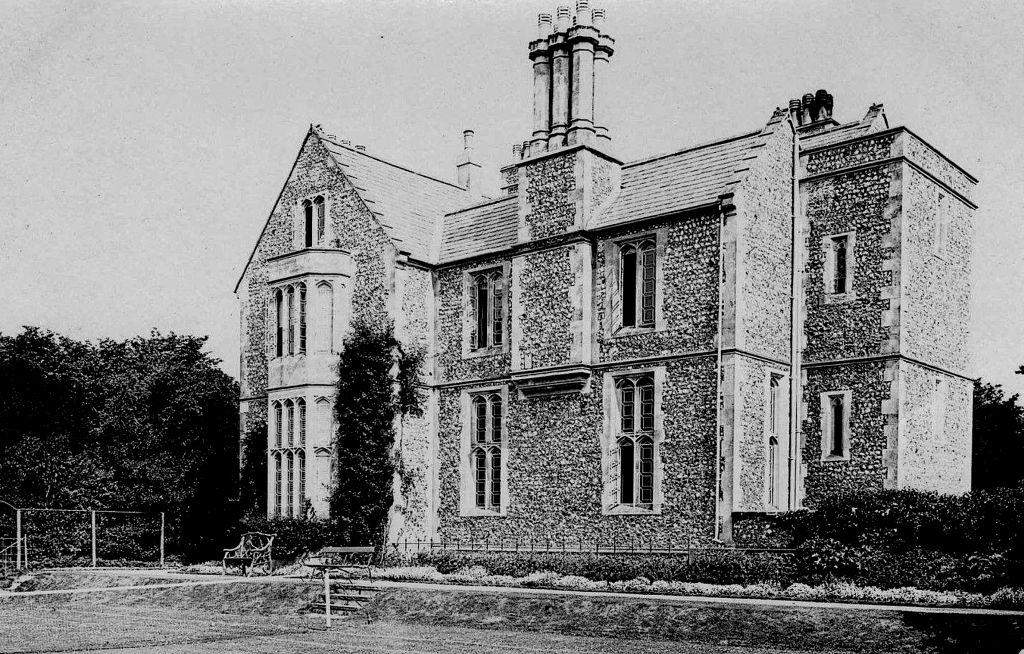
The rediscovery of the fabulous Buckingham Book has presented some superb views of well known Shoreham. This comparison of Shoreham Court between 2025 and 1880 shows the building has weathered the 145 years quite well.
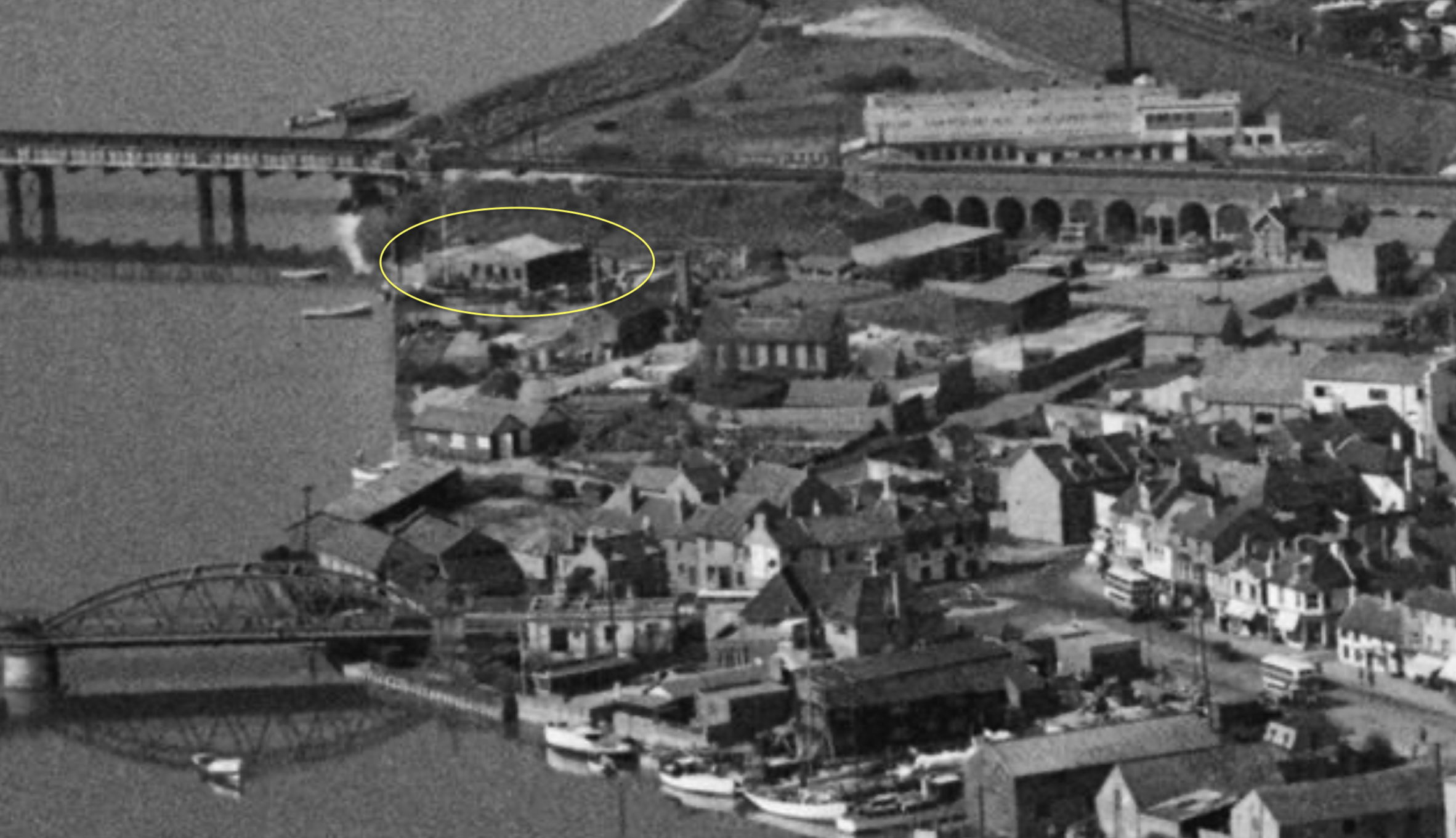
The 3rd Shoreham Sea Scout Group was formed in 1919 by William L T Roberts a Cornish seaman who settled in the town at the termination of the First World War. In 1923 he joined the Metropolitan Police, later transferring to the Thames River police. The first recorded Group Scout Leader was Captain C T Keigwin, R.D, R.N.R, F.R.G.S, also a Cornishman, appointed in 1929.
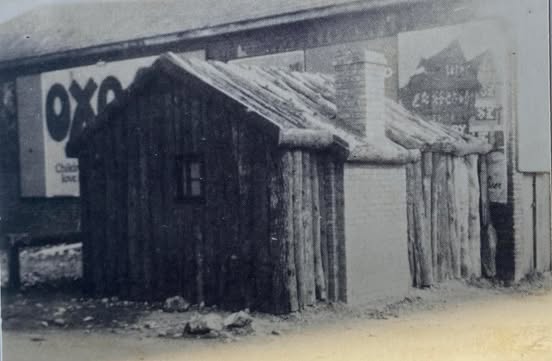
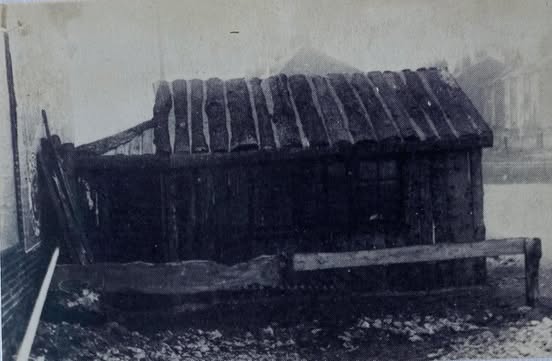
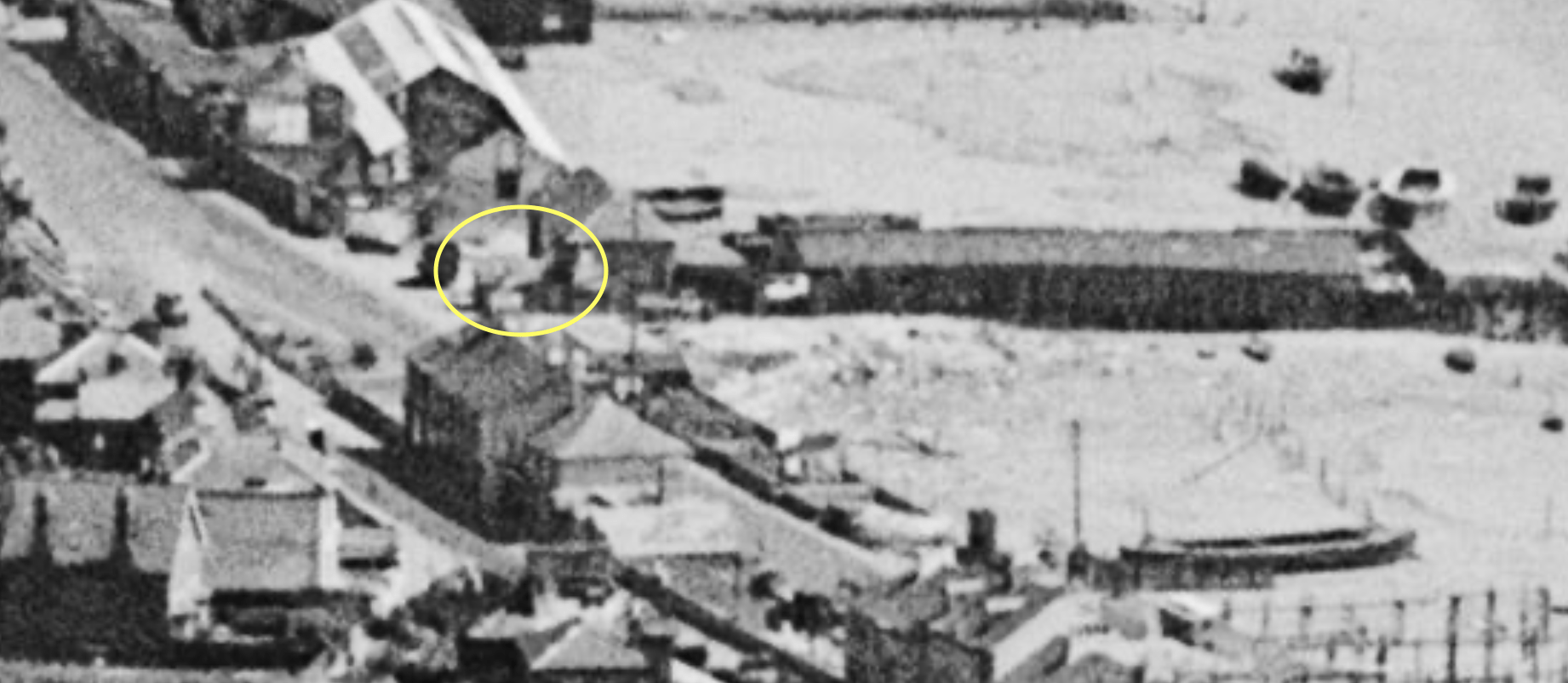
In 1919 the Sea Scouts occupied a small shack situated on the Surry Hard. The shack was originally used by 1st Shoreham Scouts from 1911. During the First World War the number of Scouts dropped and by 1918 the 1st Shoreham Group fell into abeyance. 3rd Shoreham Group took over the building from 1919.
It was in 1939 that the Group adopted the title ‘Sea Scout Ship Terra Nova’ after R.F. Scott’s Terra Nova Expedition, officially known as the British Antarctic Expedition 1910-1913
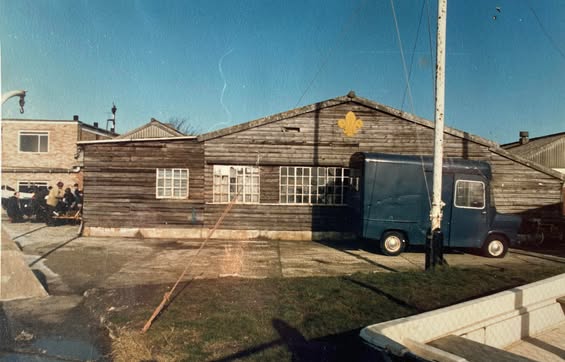
In 1939 a new HQ was built from a second hand aircraft designers’ building acquired from the now famous F G Miles the British aircraft designer and manufacturer. This was sited in the Shoreham Urban District Council works yard in Ropetackle.