
Shoreham or Newhaven?

If unsure, just land and ask a local.
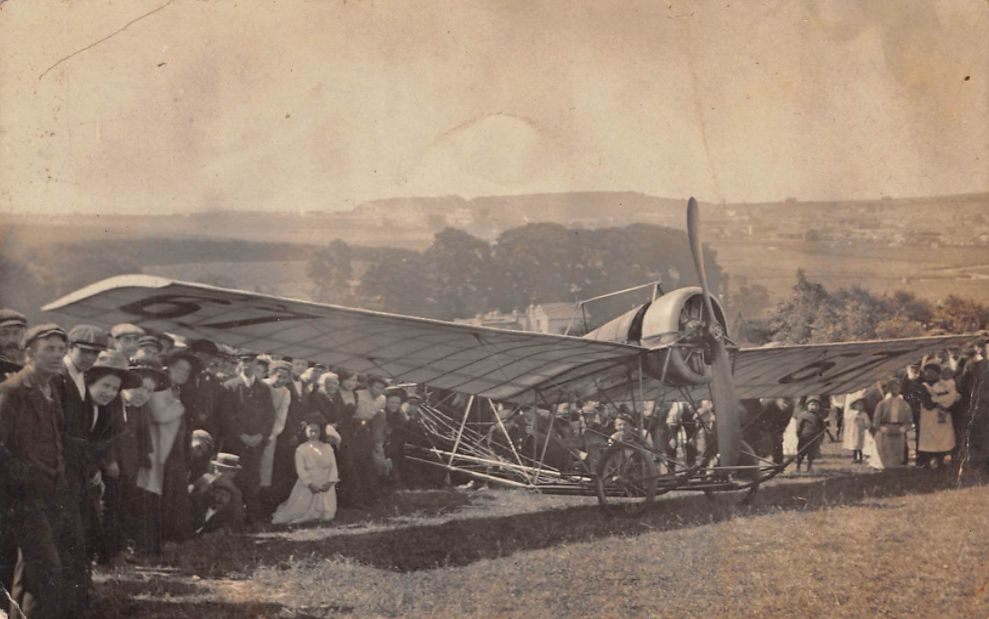
This photograph was unidentified until recently. It is of a daring early aviator Louis Emile Train who designed his own aircraft and competed in a number of races. The story behind this photograph is amazing. It should have been taken at Shoreham airfield at the penultimate stage of the Calais to London Air Race of 1911.

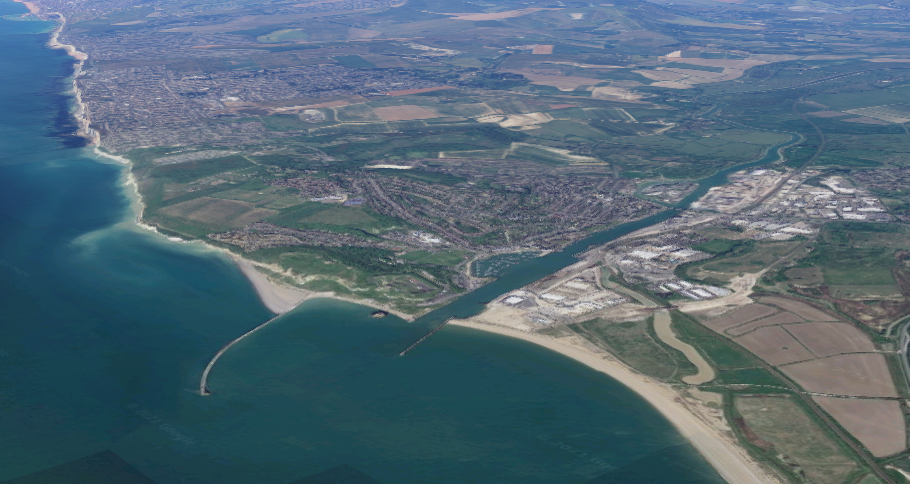
Unfortunately after flying over the English Channel heading to Shoreham before taking the last leg to Hendon Louis was presented with a challenge – what did Shoreham look like? He knew the Adur was a landmark, with Downs all around – but he came across Newhaven first and when Louis failed to find the aerodrome he decided the best approach would be to ask a local for directions. He put down his aircraft in a sloping field to the north of Newhaven.
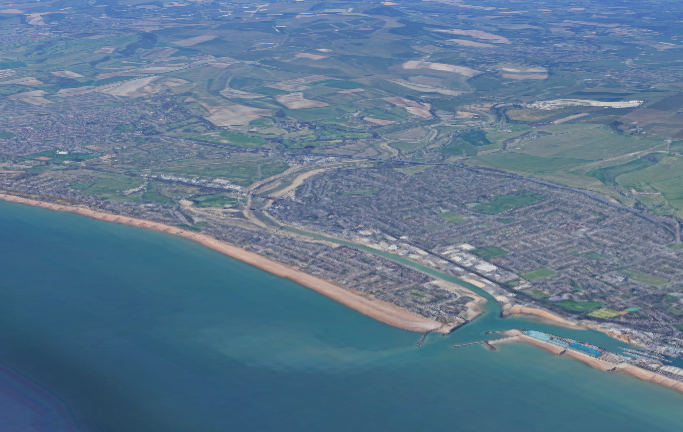
Shoreham
Newhaven

He executed a difficult landing on a sloping field without incident, until the aircraft came to a halt – at which point it rolled backwards down the field. Unequipped with brakes the aircraft ended up in the field fencing and the tailplane was irreparably damaged. Louis was forced out of the race and never got to Shoreham.

The photos of the hubbub that ensued once the locals learnt of the unofficial French invasion and landing can be seen here.

The location of the field at South Heighton is here.
Shoreham Cine and Miniature Camera Club

Film of the “new” clubhouse arriving on a truck at Ropetackle in 1958 Courtesy of Brian Meetens, South Downs Film Makers

The Shoreham Cine and Miniature Camera Club was started in the late 1950’s by local retailer Paul Plumb. He gathered a group of friends & advertised in the local press to form the cine club. Paul had a shop in Shoreham & was very well known for his enthusiasm about life in general. The response he got was quite amazing, in the region of 60 people were interested in becoming members.

Continue reading “Shoreham Cine and Miniature Camera Club”

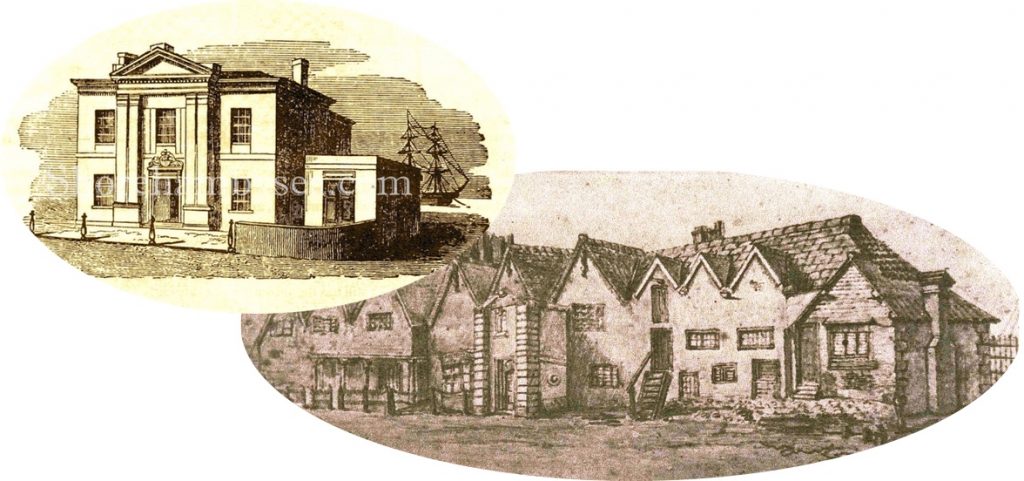
The Old Town Hall

Built as a Custom House in 1830 by George Henry Hooper at the expense of the ancient Poole family mansion that had stood on the same site for centuries before. Hooper was himself a descendant of the Poole family and the new building was, initially at least, an attractive one designed by Sydney Smirke R.A, but its appearance was somewhat compromised during the subsequent enlargements of 1920.

Continue reading “The Old Town Hall”

Where is Shoreham’s Pickett-Hamilton?

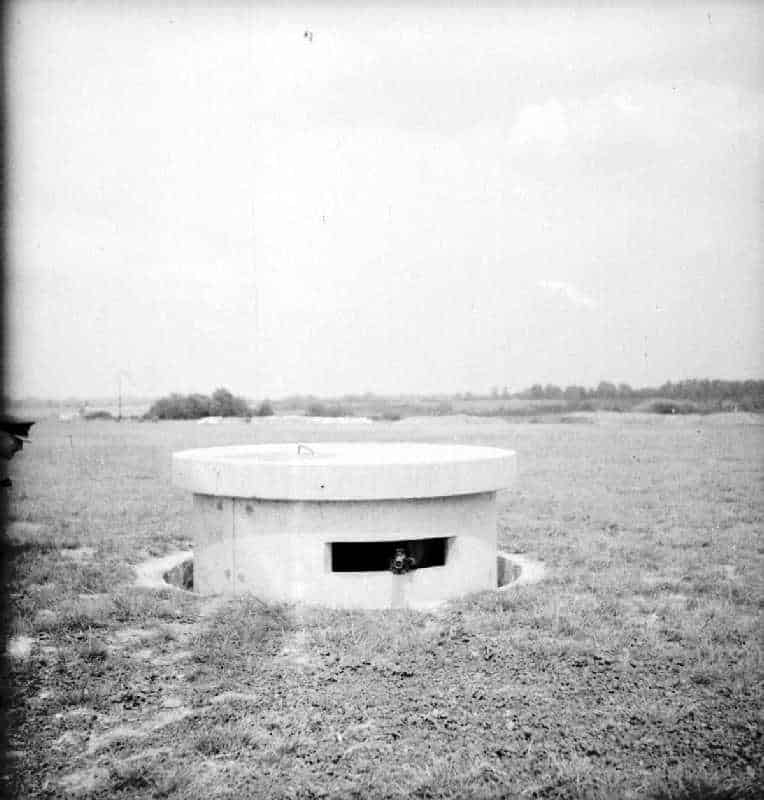
There is a curiosity hidden deep in the plans and maps of Shoreham Airport… the previous existence of three WWII Pickett-Hamilton Defensive Forts. Are they still hidden under the grass and tarmac? Are they lost?

Pickett-Hamilton Retractable Fort, fully raised and manned, taken on an airfield in Southern England. RAF FIGHTER COMMAND, 1939-1945 © IWM (CH 17890) IWM Non Commercial Licence
Continue reading “Where is Shoreham’s Pickett-Hamilton?”

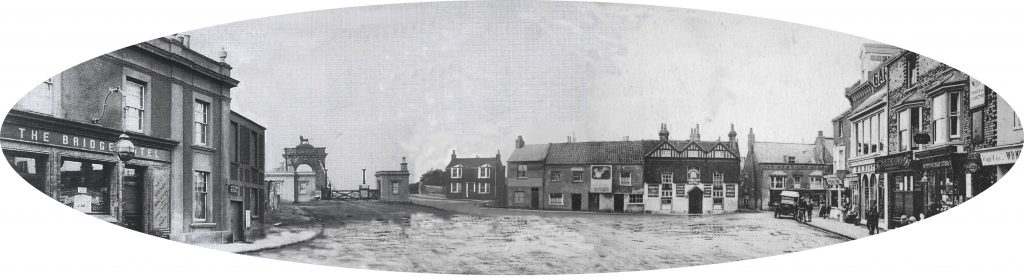
Ropetackle – the last 300 years

– a collection of images from the galleries and collections of shorehambysea.com illustrating the changes to the area since the 18th century.

What a wonderfully eccentric place it was! Besides a fascinating ropemaking and shipbuilding past there were, in Victorian times, ancient buildings still standing, quaint cottages, wharf houses, a gas works and, spookily, a mortuary alongside an incinerator! In the Little High Street there were peculiarly shaped houses and strange, shop-like windows.

It was never a fashionable area, being part industrial and part residential where the poorer, labouring families largely dwelt. In 1817 William Butler’s poor grammar  described it as being “the lower ‘hend’ of town” and goes on to mention a ‘pour new’ shop where he had ‘connections’ with Sarah Fillaps. Something of a mystery and perhaps a pawn shop (a corruption of the French ‘for us’) or as William’s escapades suggest one of the numerous brothels in Shoreham port then?

During the early part of the 19th century Ropetackle included wharf houses, sheds, a brickyard, coal yard, a bonding pond, Thomas Clayton’s deal yard, his cement factory, stables, a mixture of 17th to 19th century houses and even a mill pond. By the Victorian era there was also a sewage plant and of course the gasworks, flint-built ware houses, incinerator and mortuary. It all added to a certain air of eeriness and mystery to the area.

Continue reading “Ropetackle – the last 300 years”

HMS Dover

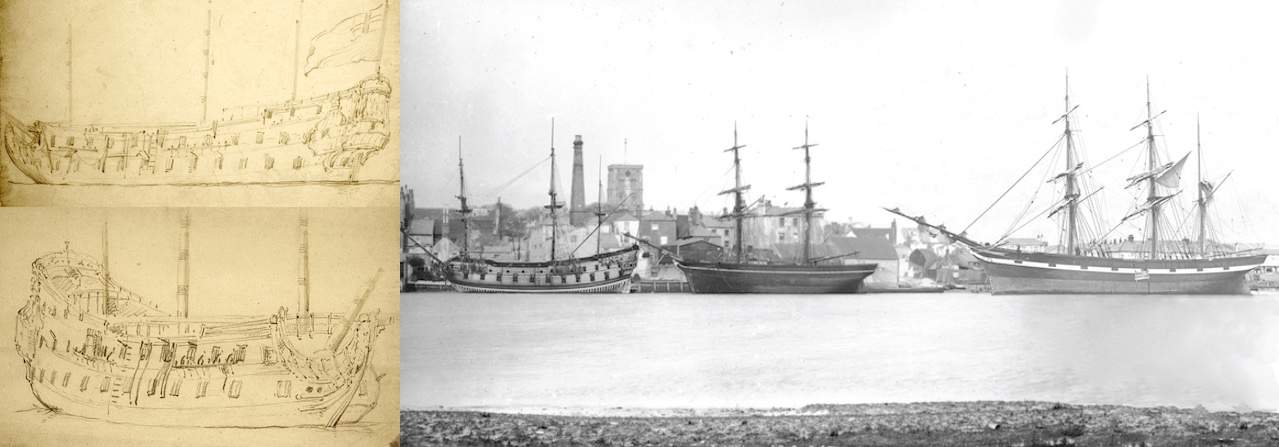
Naval sketches of the fourth rate, 48 guns,  three-decked man-of-war HMS Dover, built at Shoreham in 1653, give the impression of a very large ship. Surprisingly at 533 tons and keel length of 104 feet it was very similar in terms of length and tonnage to many of Shoreham’s typical 19th century home built merchantmen such as the Shamrock 500 tons/117 feet; Agricola 600 tons/119 feet and Cambria 500 tons/116 feet.


Visual comparisons perhaps give more idea of sizes and this view of an average 19th century vessel between the Dover (left) and the considerably larger Britannia (right, recorded at 800 tons and a length of 140 feet) reveals a perhaps diminutive but nevertheless beautiful example of Shoreham’s shipbuilding history.

East Street Arms

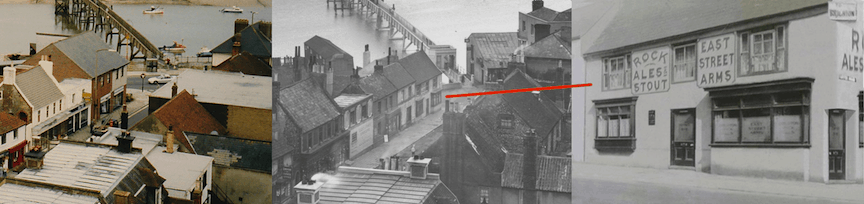
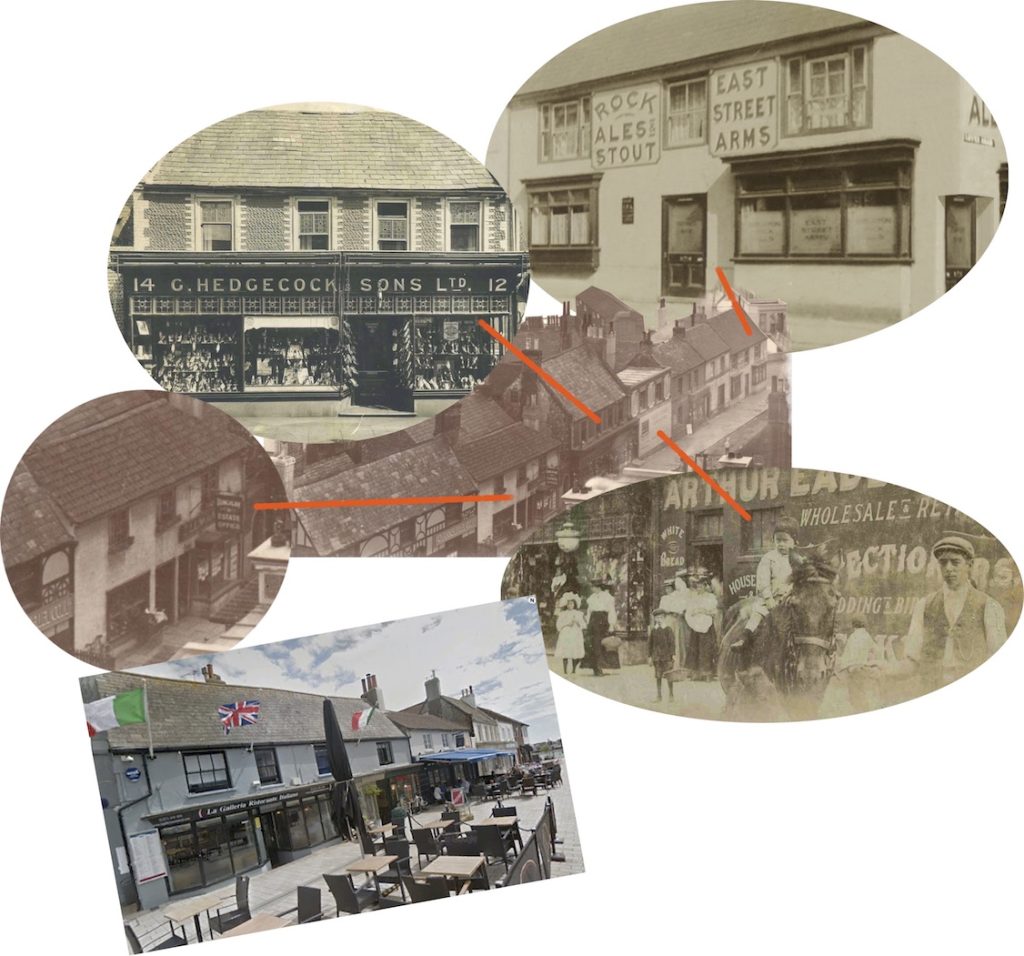
The sad loss (besides others) of the two southern-most buildings on the east side of East Street included the East Street Arms inn. More usually seen from a distance in photos from the church tower this rare shot reveals it in more detail. (from a Michael J. Fox photo)