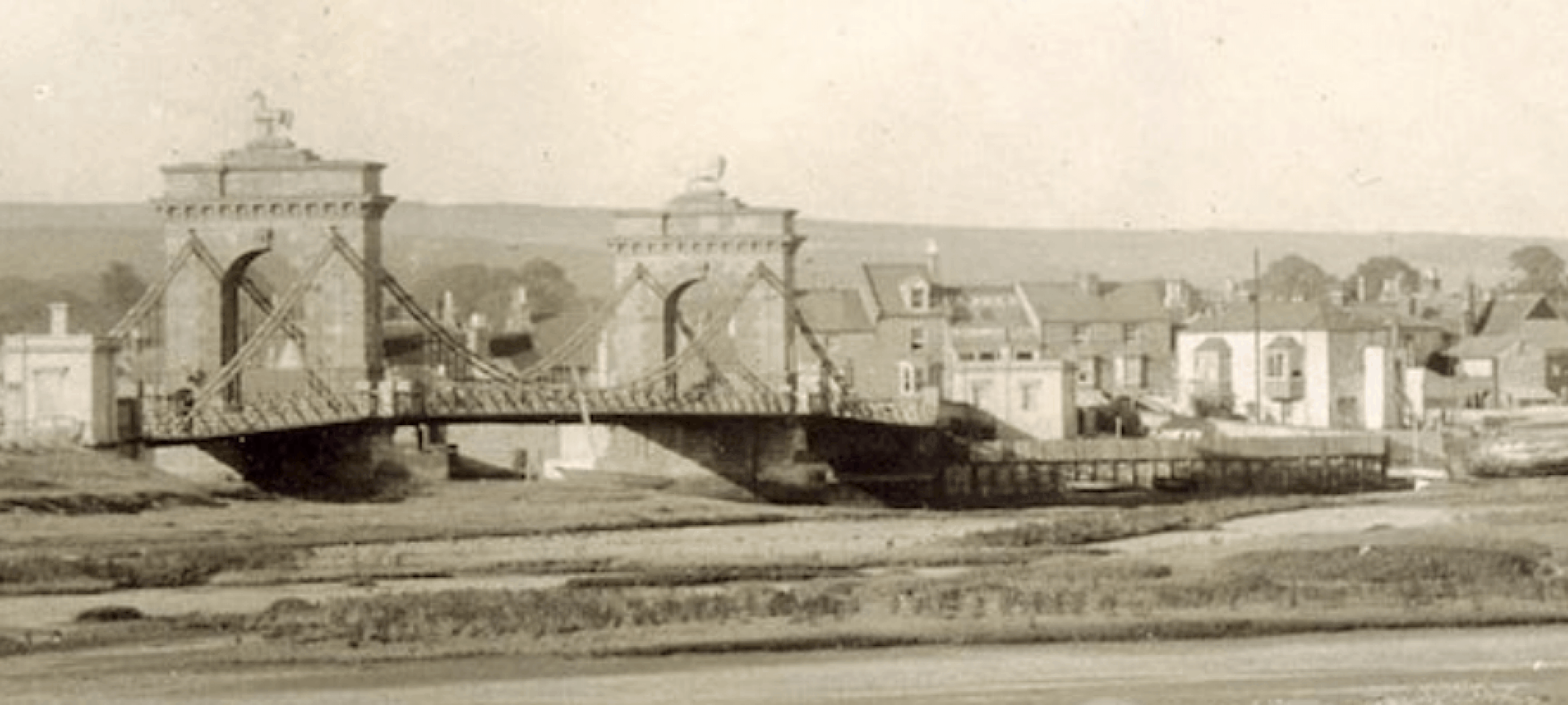

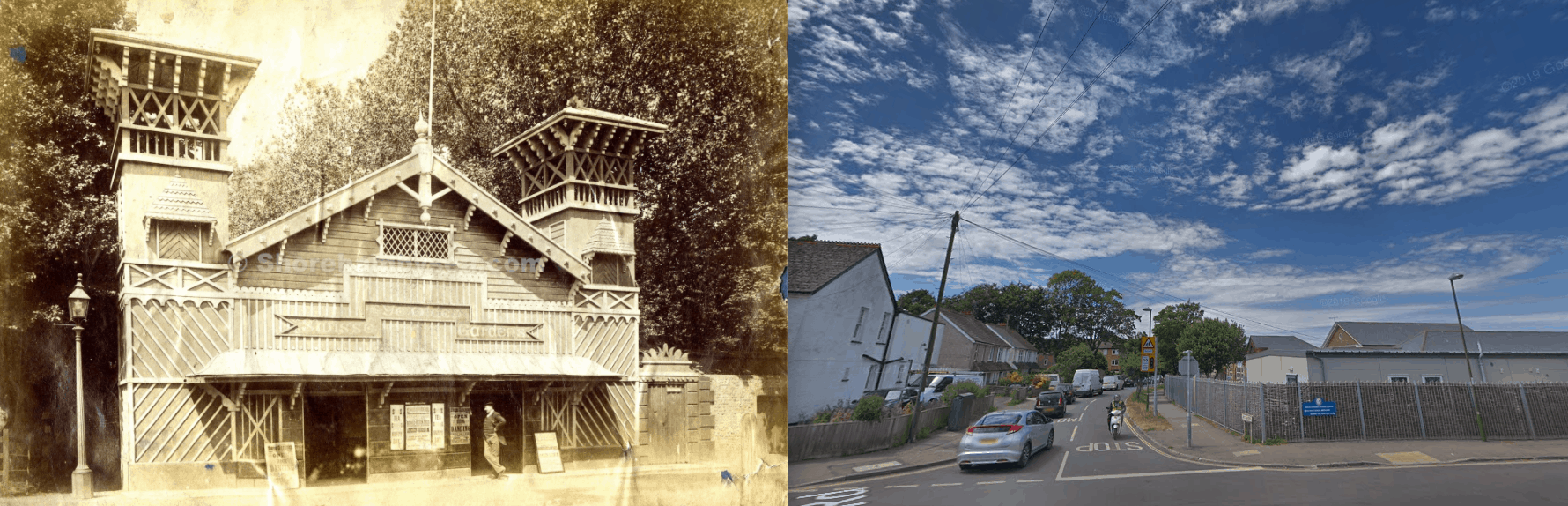
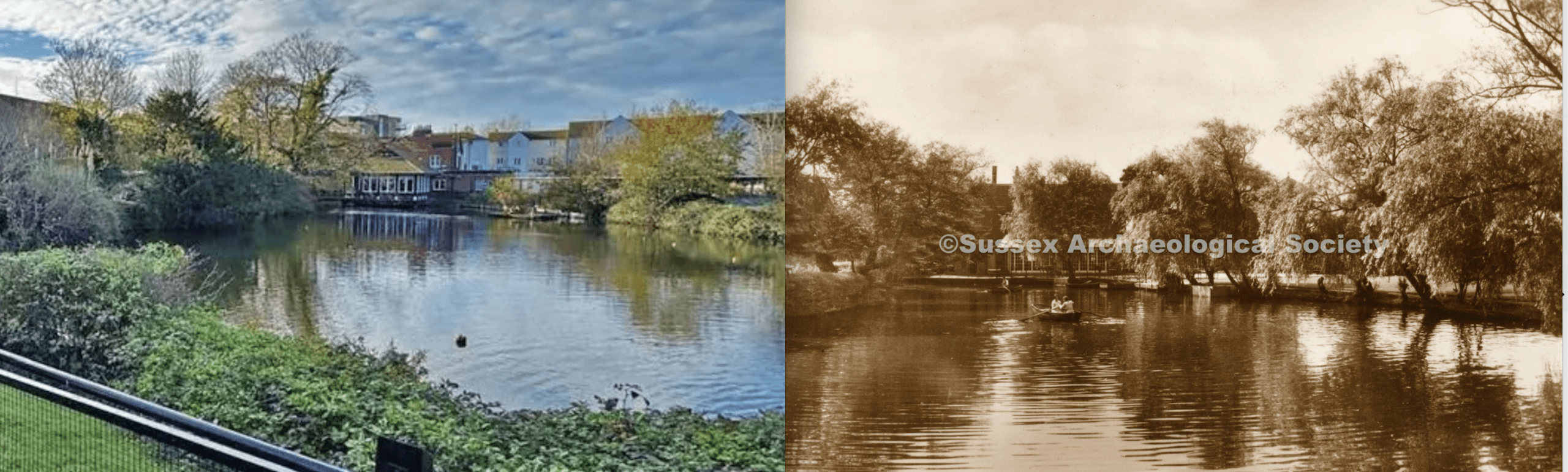
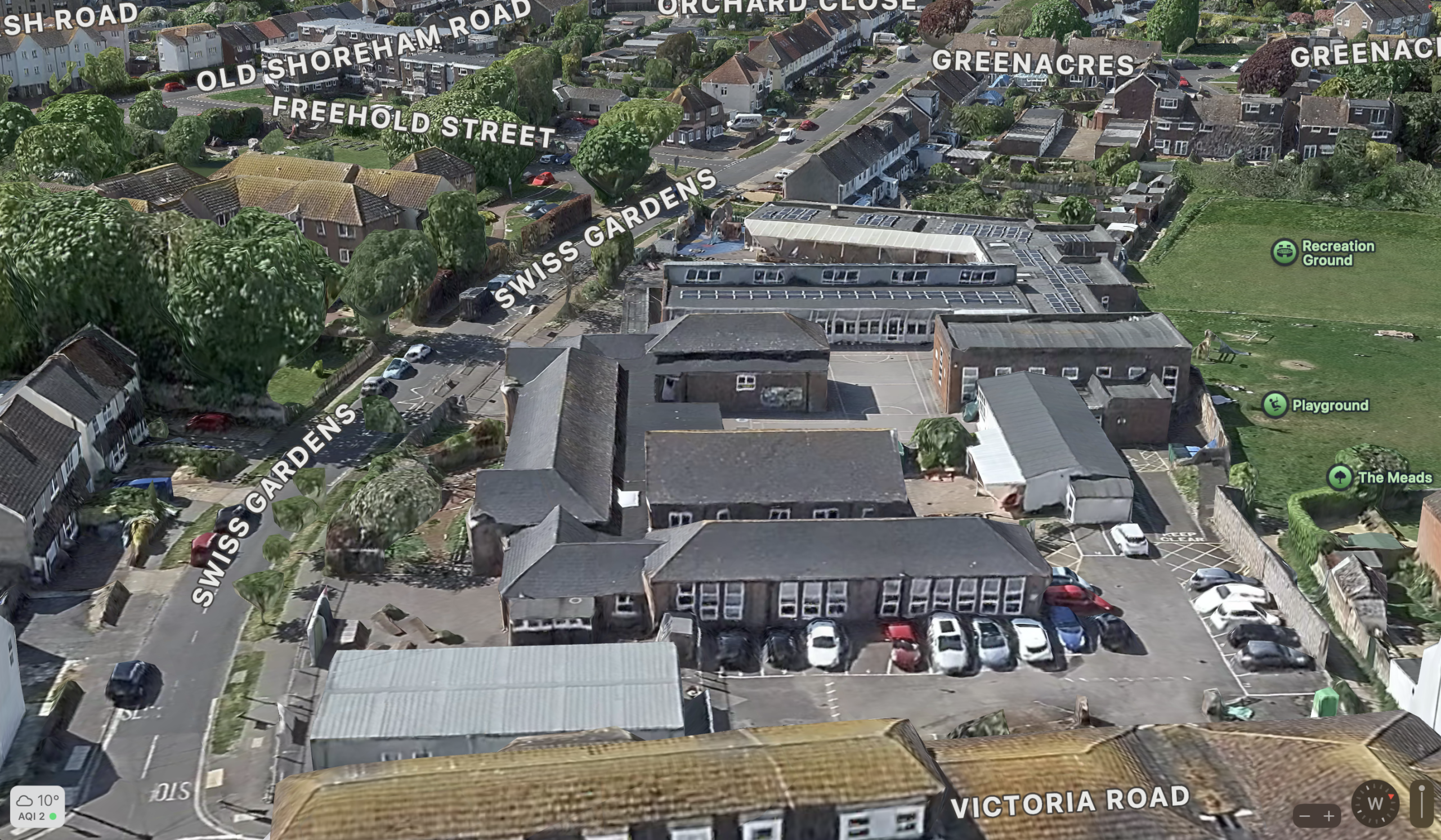
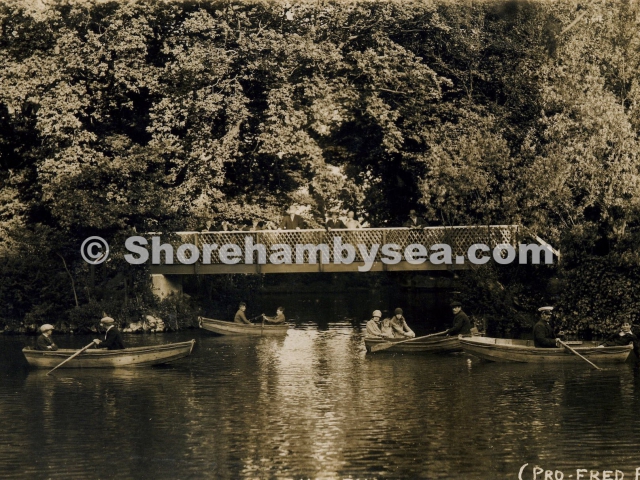
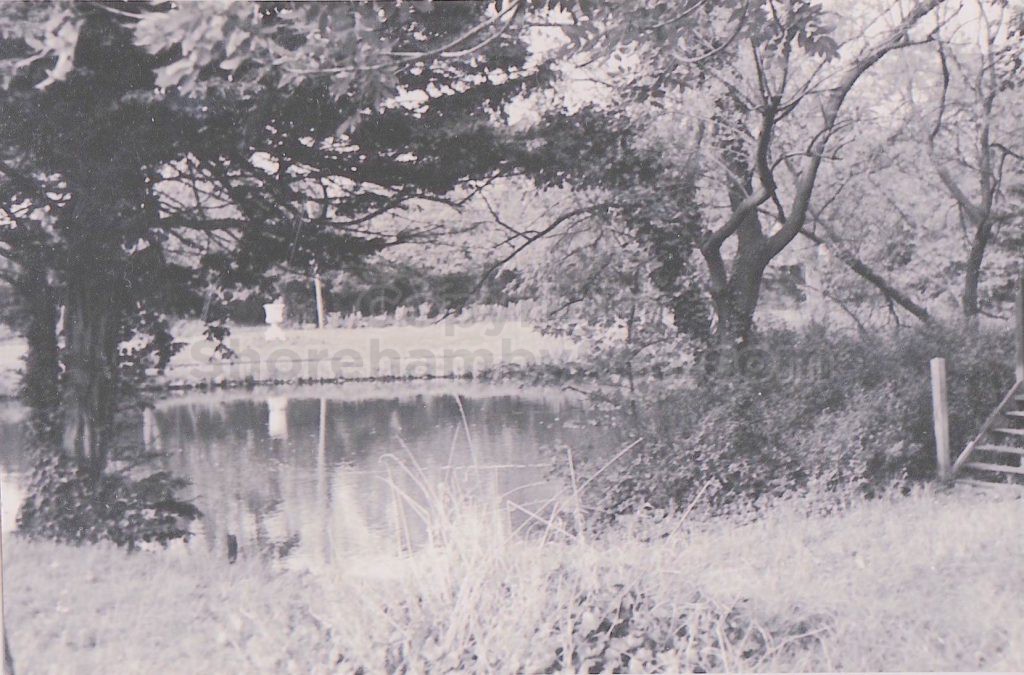
If you look closely there are a few clues to the former use of the Swiss Gardens School site – the Swiss Gardens pleasure garden (1838 – 1910). The Lake is the most obvious, to the South of Swiss Gardens road in the grounds of the Swiss Cottage pub. Hidden in the gardens of Homehaven Court is the remaining wall of the grand theatre.
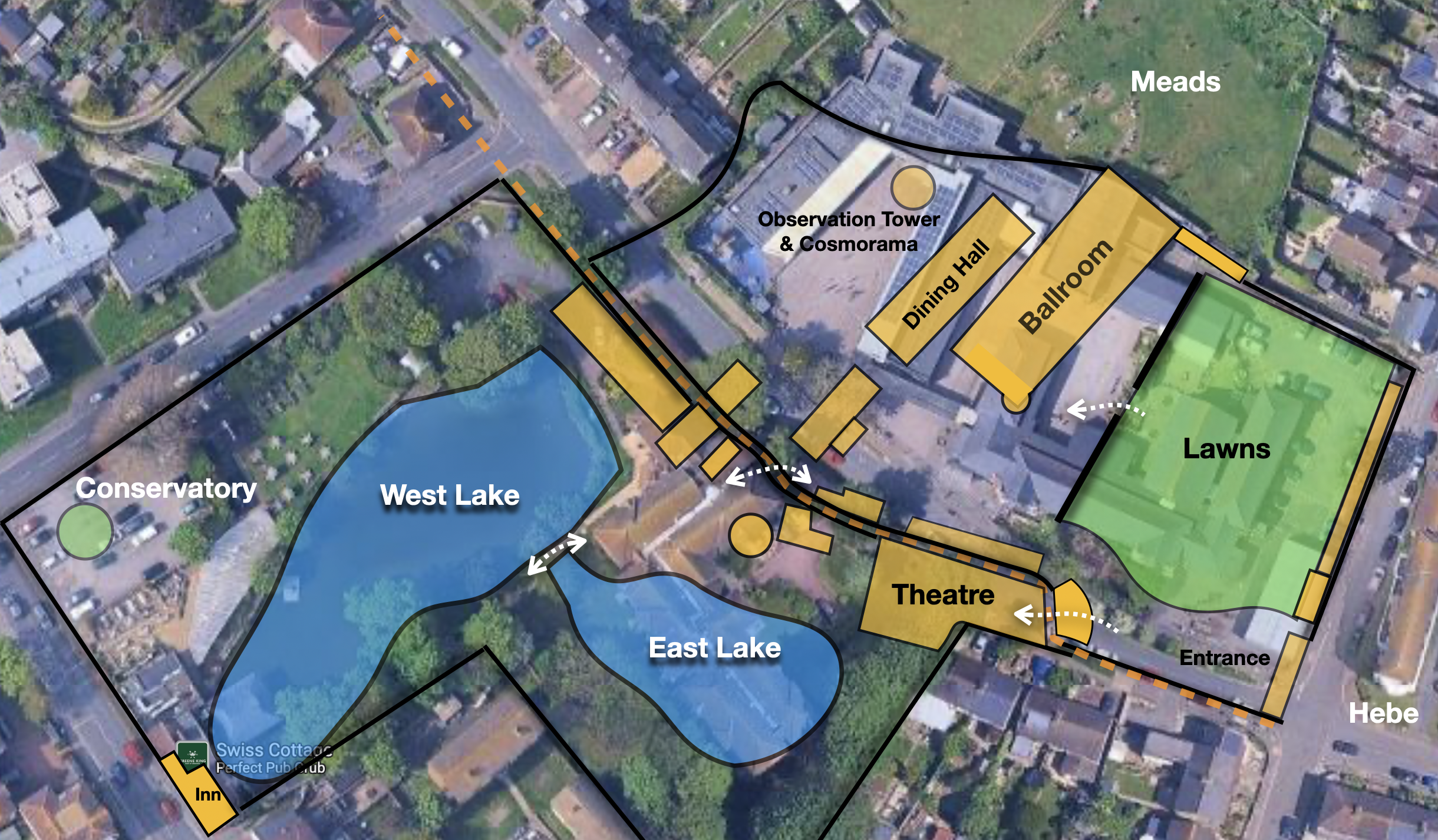
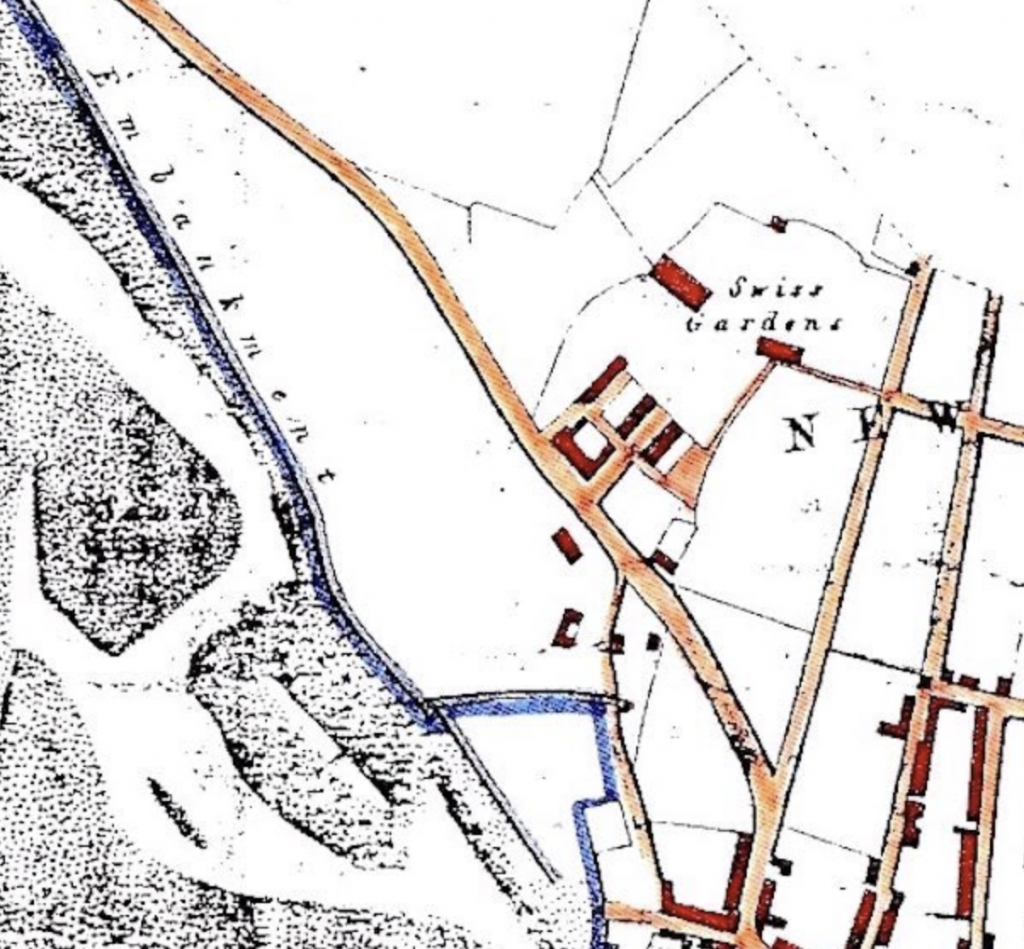
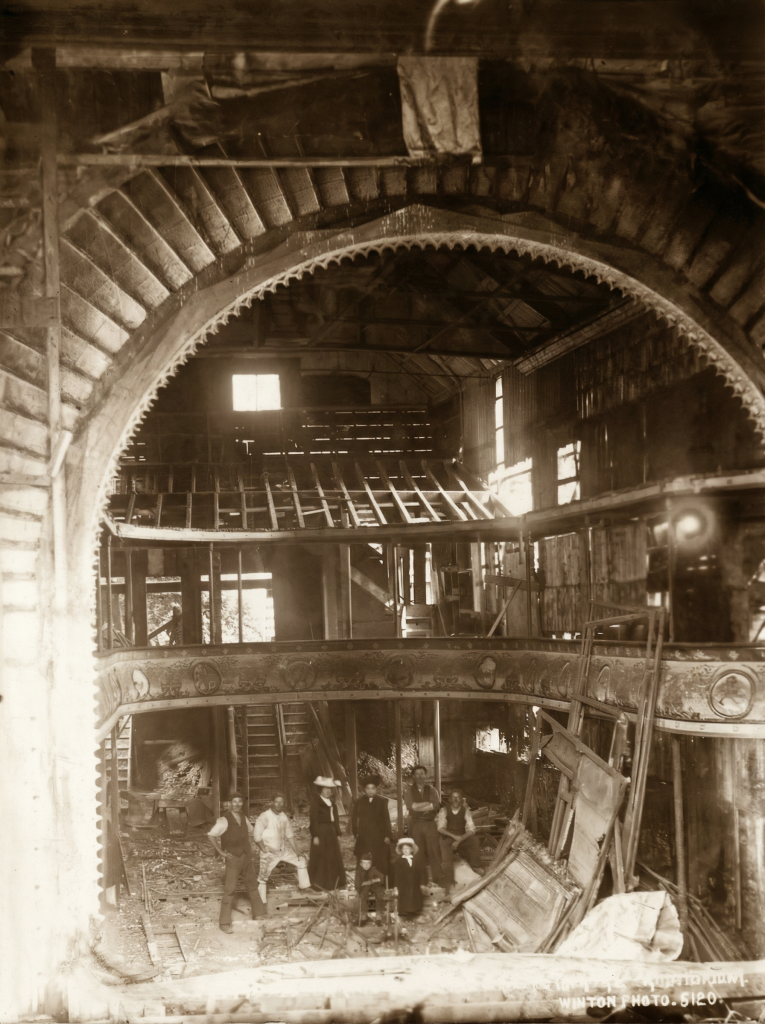
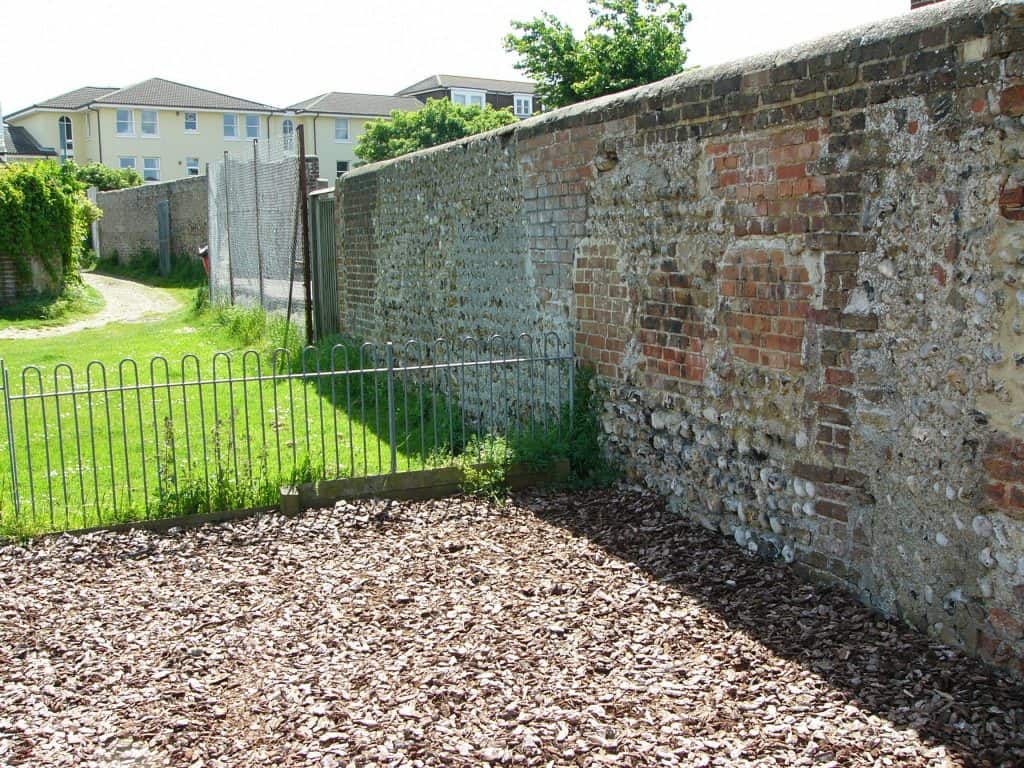
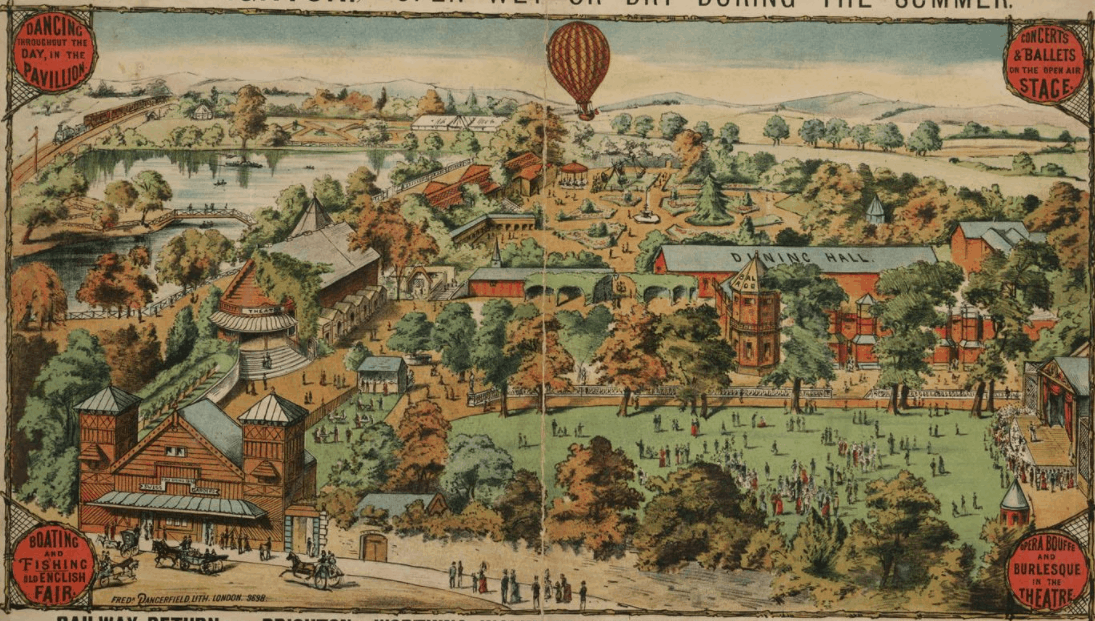
The tall boundary wall to the North between the school and the Meads, looks to be the original wall of 1838. This had an undulating top and a kink in its alignment (until part of it was pushed down in the 1990’s) . If you refer to the the poster illustration of 1875 it suggests this 12 – 15 foot wall was the back wall to a theatre-style open stage (to the right in the poster below). There were cart sheds / stables that are evident in early photos of the school. The cart shed in the Meads lasted until the 1990’s and whilst the boundary wall has been repaired many times it is possibly that is the only visible 1830’s structure left.
Locals referred to the high walled twitten alongside the entrance lodge leading to Old Shoreham as ‘The Dungeons‘. The alley bisected the pleasure gardens and was walled either side preventing the public gaining access without paying.
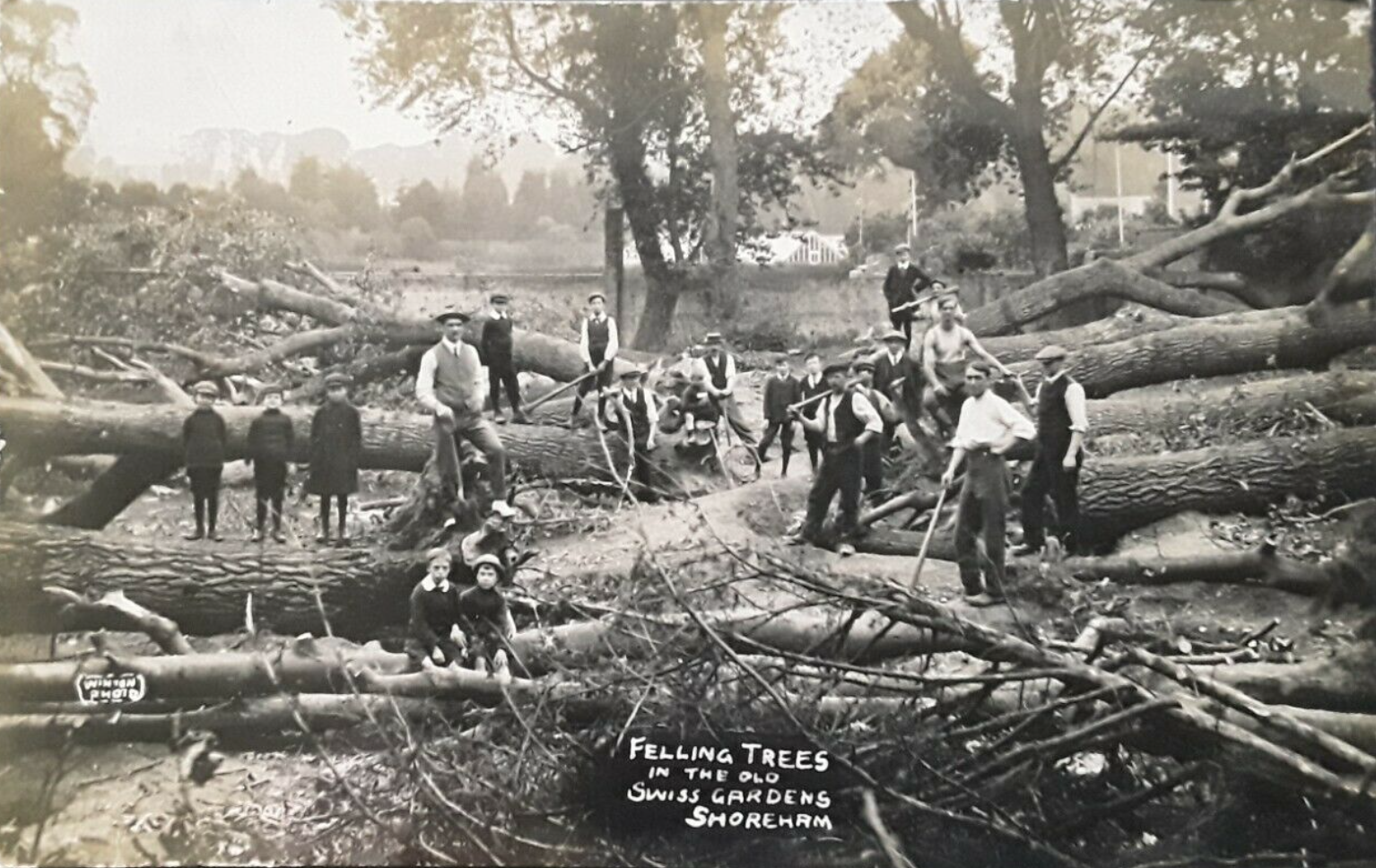
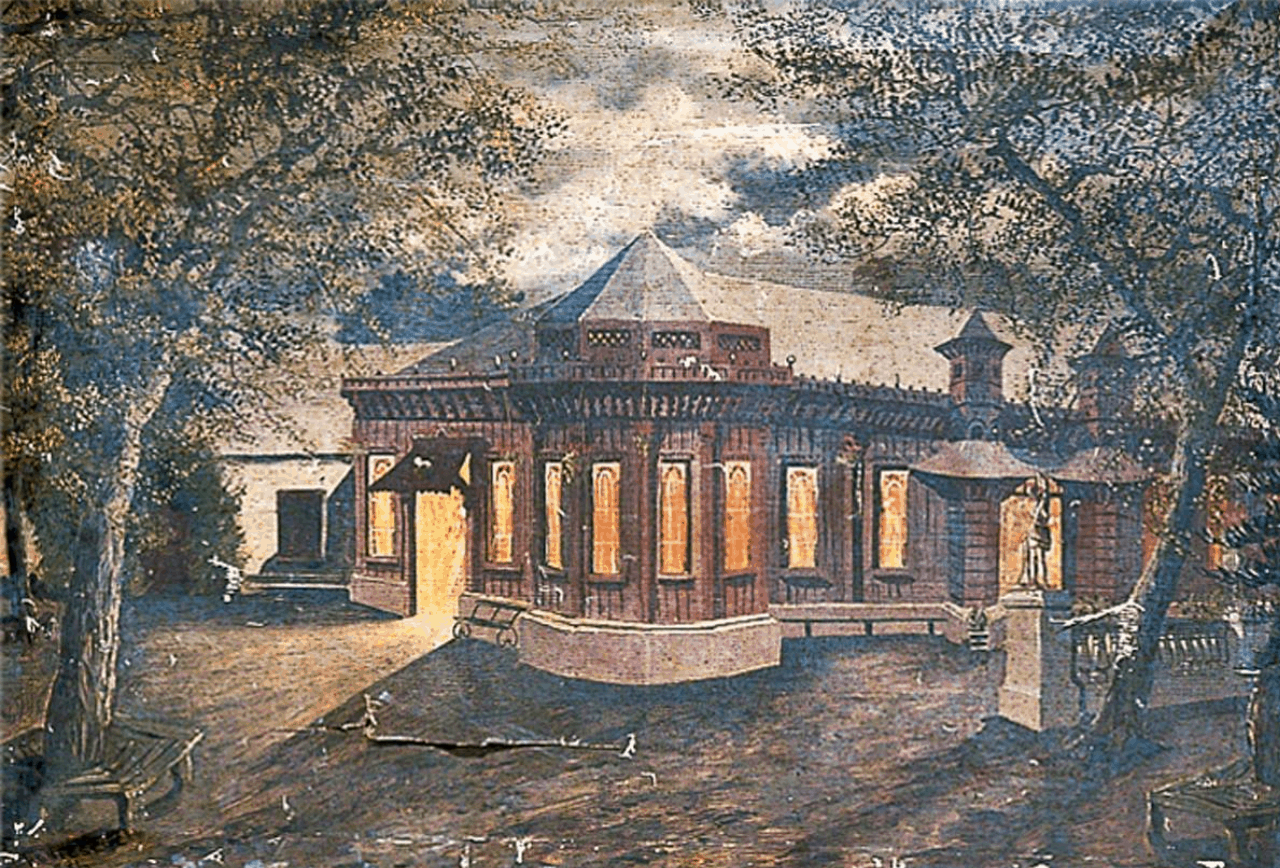
By the early 1900’s the site had been abandoned by the proprietor of the Swiss Gardens and local children explored the wild overgrown site. The derelict gardens lent themselves to painting and was inspiration for local artists. By 1915 the site was cleared and the new school replaced the wilderness.
William Banks Fortescue (1850–1924)
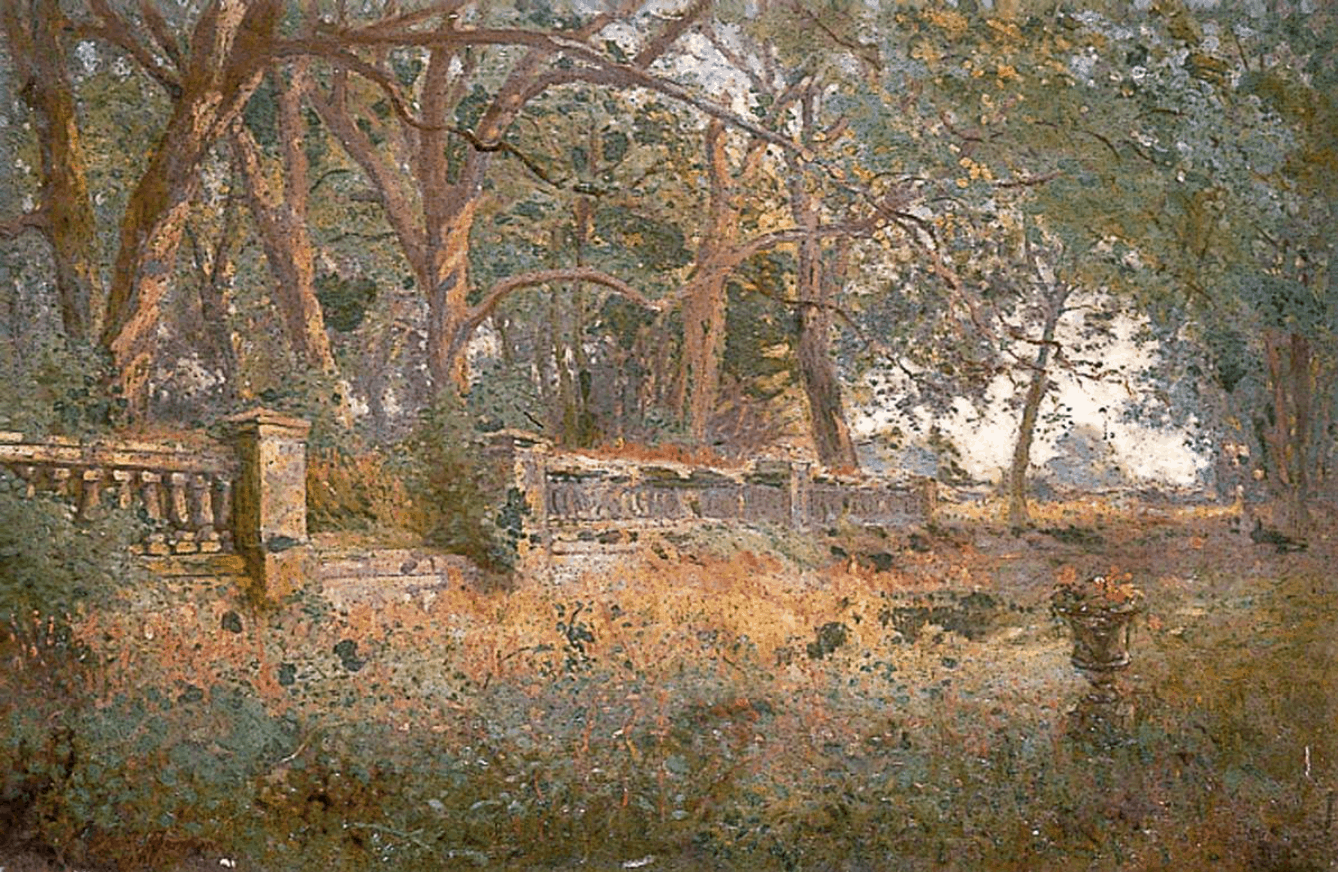
Brook Harrison (1860–1930)
The lakes continued to be used from the 1920’s with the re-opening of the Swiss Cottage pub in 1928. The East lake was filled in the 1970’s. The flats at Homeview Court were built on the site adjacent the remaining West Lake.
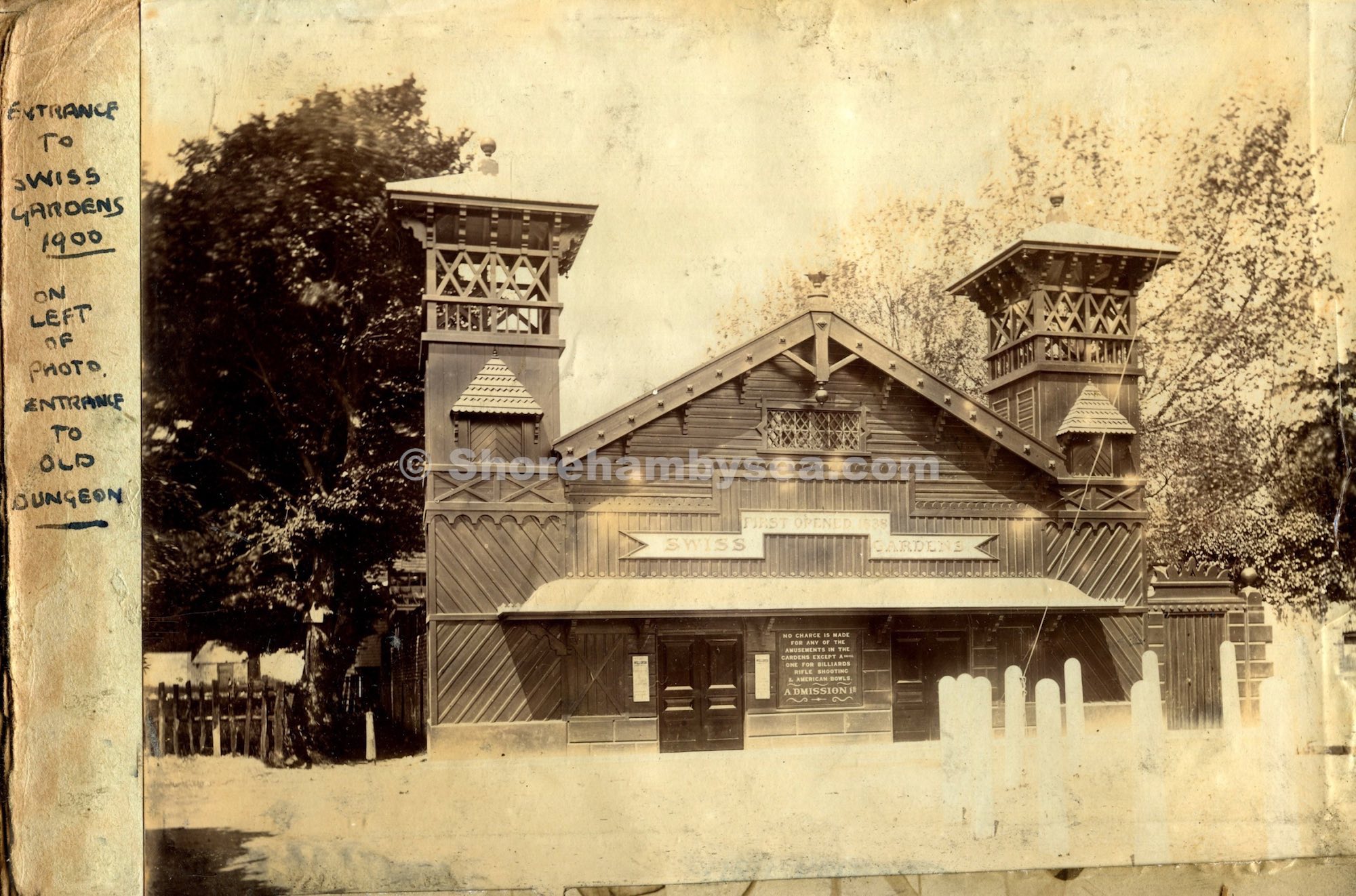
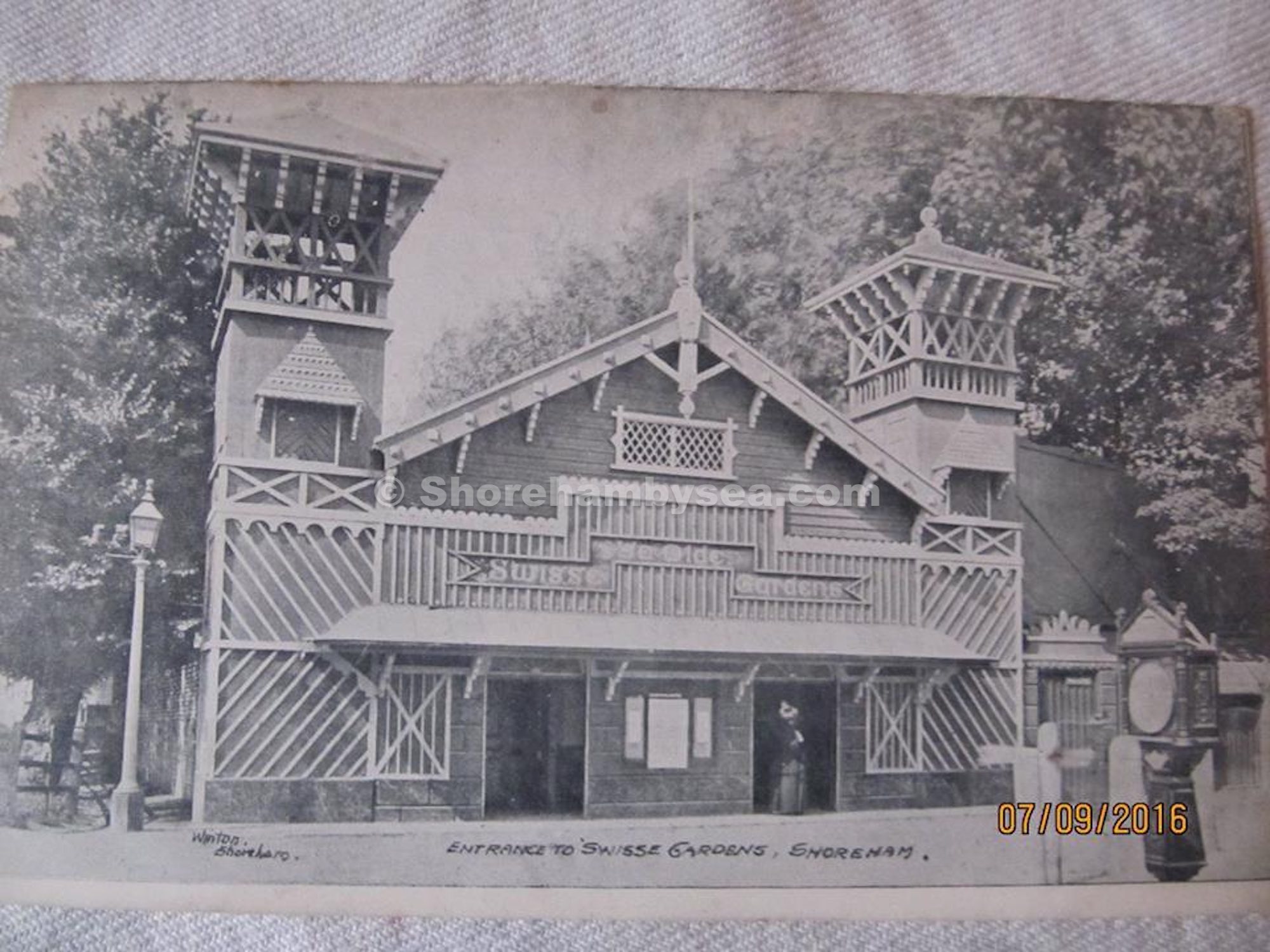
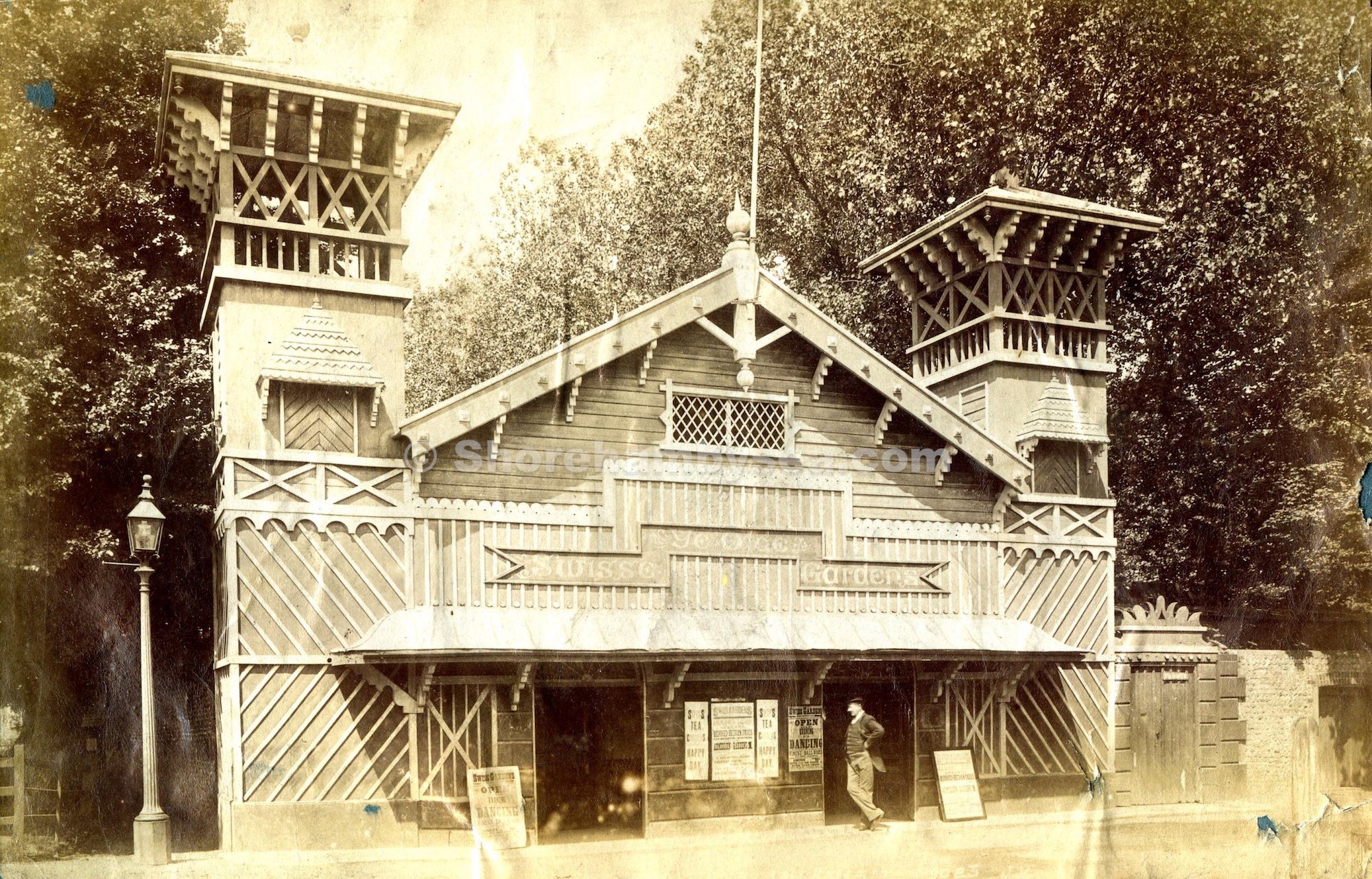
The entrance Lodge, built in 1838 is difficult to date in the various photographs available to us. A few clues help. The dark colour scheme appears in a Winton image dated 1900. The later images show white detailing to the wood. Note the gas street lamp at the entry to the alleyway to the left of the lodge. These lamps are also evident in other photographs dated as 1881 but are clearly after the image without the lamp – so photographs with the lamp are after 1900 – unless that date was speculative. The size of the trees also suggests which are later images. Wider viewpoints show there was a flagpole in the road and a weighing machine outside the Hebe pub.
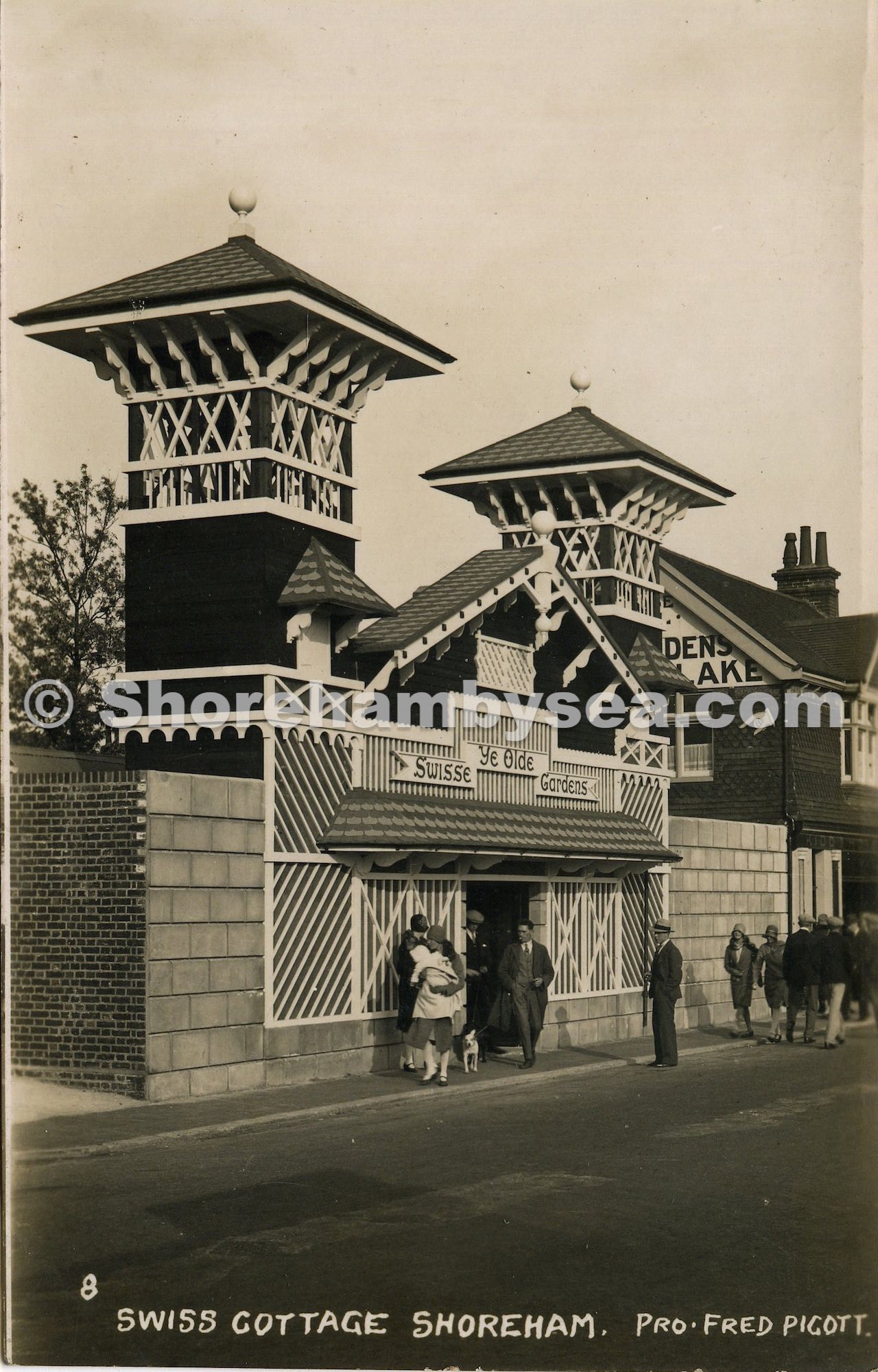
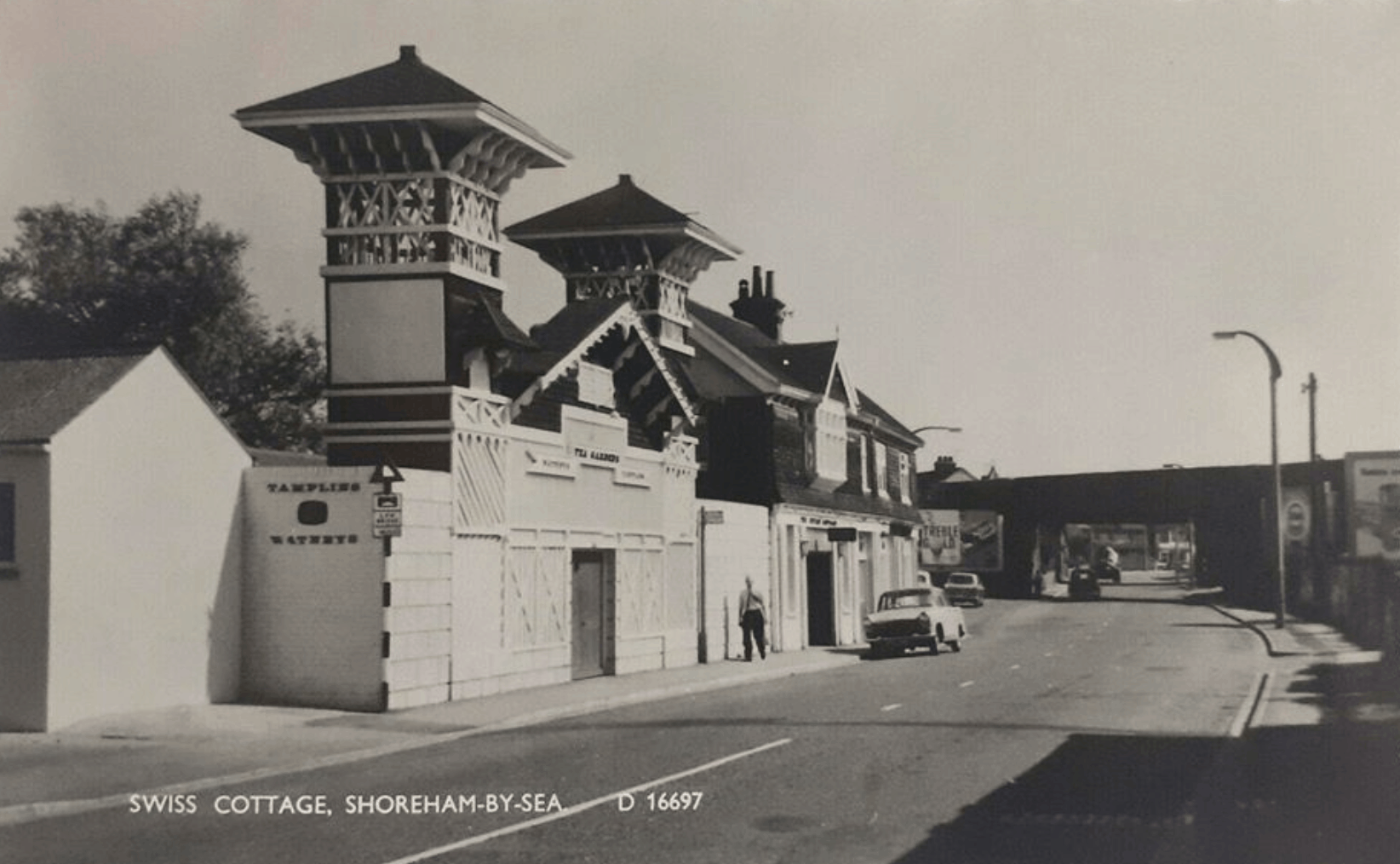
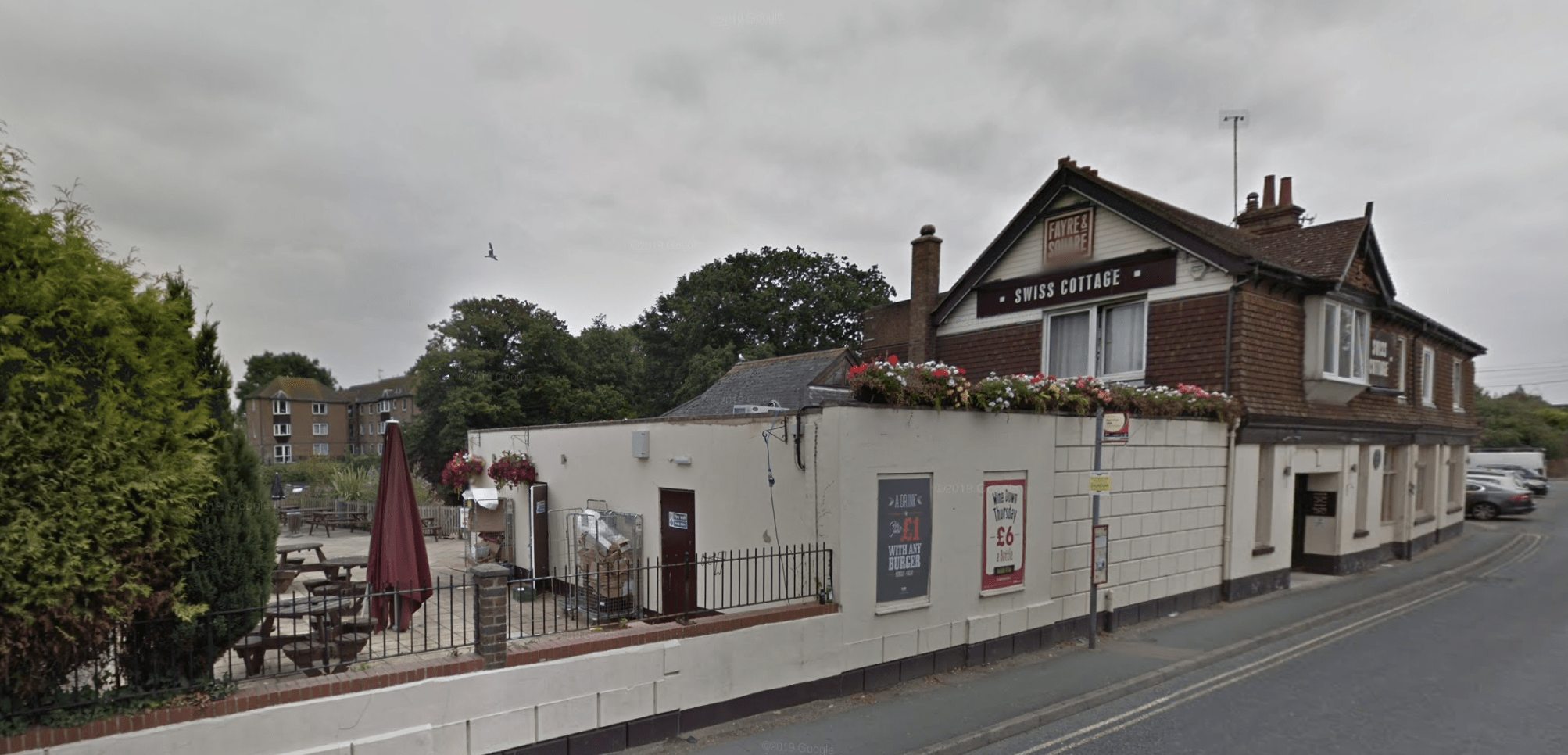
A mystery persists: the grand wooden entrance lodge, built by Balley’s shipbuilding craftsmen in the distinctive Swiss chalet style, lasted from 1835 until closure and removal in 1913. Was it demolished or dismantled? 15 years later the Swiss Cottage pub re-opened and with it arrived a new Swiss entrance lodge on the Old Shoreham Road frontage. The design was identical to the Victoria Road lodge – was it re-assembled from storage or was it newly constructed from the 100 year old plans? The Old Shoreham Road towers were taken down in the 1980’s.
Timeline of the Swiss Gardens
18th century — land ownership background
- 1782: Records show the low marshy land called “David’s Marsh” (the area later occupied by Swiss Gardens) belonged to shipbuilder John Edwards; the land later passed to his son-in-law John (James) Britton Balley (the founder of the Swiss Gardens). Embankment work made the site suitable for development.
1830s — creation and opening
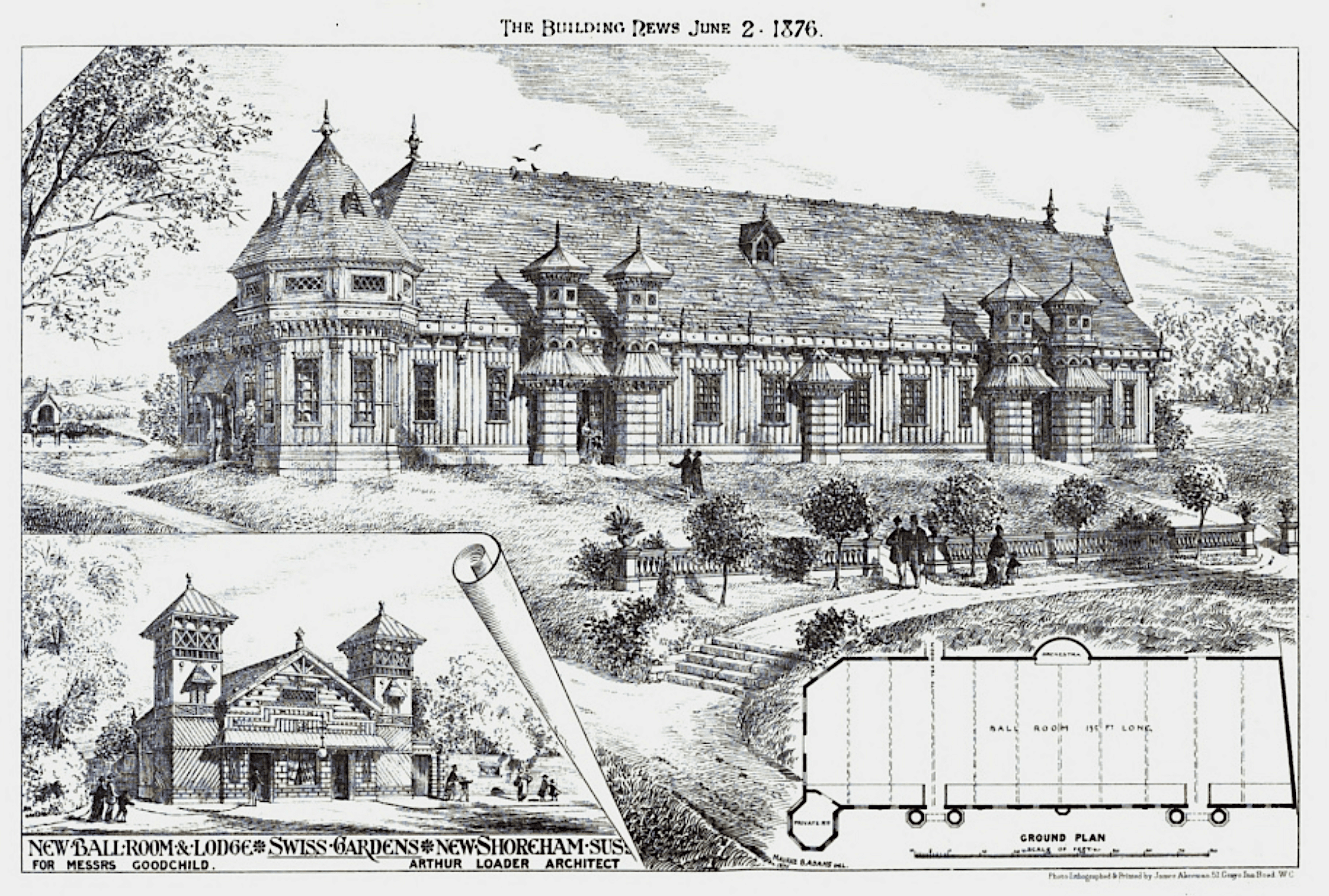
- c.1835–1838: James Britton Balley ( a local shipbuilder residing at Longcroft in Hebe Road) laid out the pleasure gardens and had a characteristic Swiss-chalet style entrance lodge and an assembly/ballroom built.
- 1838 the Swiss Gardens were opened in 1838 (noted in contemporary accounts as the year of Queen Victoria’s coronation). Balley is named as the creator and builder. The complex included an assembly room/ballroom (large ballroom), lake, grotto with a chalybeate spring, promenades, theatre/assembly spaces and numerous amusements. shorehambysea.com+1
1840s–1850s — heyday and attractions
- 1840s–1850s: The gardens became a popular seaside day-trip destination after the railway arrived in the area (railway connection encouraged day-trippers). Attractions recorded in detailed contemporary descriptions and posters include: a ballroom, lake with a small steam launch called the Basilisk, boating (punts/rowboats/canoes), a grotto with a chalybeate spring guarded by carved figures, a theatre/assembly/pavilion, shooting, billiards and other amusements.
- 1853 Balley sold the Swiss Gardens to Edward Goodchild (local public-house proprietor previously associated with the Brunswick Arms). Goodchild then ran and improved the gardens as a family concern through the 1850s and into the 1870s. The operation is referenced in local directories as Shoreham Swiss Gardens Co. with Goodchild as manager.
- 1876: Documentary/architectural notices show a new ballroom date is associated with the gardens (the period produced building notices/illustrations in the Building News etc.). The Swiss Gardens complex continued improvements through this period.
- By 1878: J. B. & G. Mallison are recorded as the proprietors/operators of the Swiss Gardens.
- 1895: Thomas Fuller, M.D. appears in local property/ownership lists as owner of buildings associated with Balley/Swiss Gardens area
Early 20th century — decline, abandonment and closure
- Early 1900s: Local accounts and photographs show the Swiss Gardens in decline and parts reported as abandoned; children explored an overgrown site in the early 1900s and artists used the derelict gardens as inspiration.
1913 — demolition/clearance begins
- 1913 : The derelict Swiss buildings were demolished in 1913 and many mature trees were felled as part of site clearance for construction of the new school.
Inter-war period — re-use and the Swiss Cottage
- c.1927–1928: The surviving Swiss Cottage (the public house associated with the gardens’ entrance) re-opened around 1928 and a new Swiss-style entrance lodge / “towers” were assembled on the Old Shoreham Road frontage.
- 1930s–1940s onward: The Swiss Cottage pub continued as a feature at the west lake frontage. The Old Shoreham Road towers were signed “Tea Gardens” in latter years, and eventually they were taken down in the 1970s/1980s
Paul Osborne 2020
Images from writer’s collection, Diane Ruff, Sian Phillips, John Lyne, Sue Vincent, Aerofilms, https://maps.nls.uk/ BritainfromAbove, Marlipins Collection, British Museum.