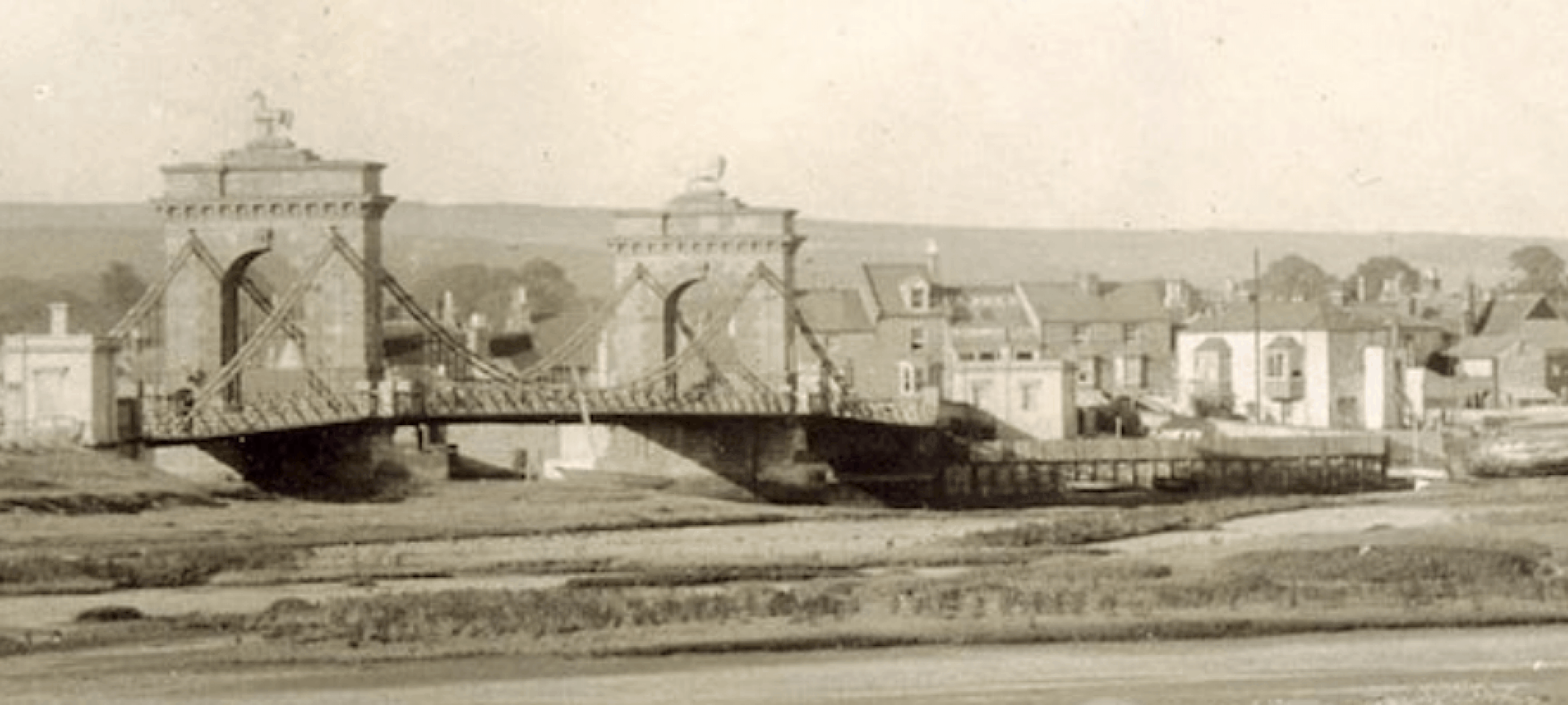

Bessie Bailey remembers Bungalow Town life between the Wars.
Recorded August 1996
Transcription:
(0:01 – 0:17)
Could you tell me something about yourself? Well, where were you born? 18. That’s right. And what year were you born? 1896.
(0:17 – 0:27)
That’s right. And whereabouts were you born? Was it Bells Lane? Bells Lane, that’s right. And you went to school, didn’t you, in Tentenden? The National.
(0:28 – 0:33)
The National School in Tentenden. Yeah, there were two schools there, the National and the British. I went to the National.
(0:33 – 0:40)
That’s right. And then you stayed there till you were 14, didn’t you? That’s right. And after that you went into service.
(0:41 – 0:57)
That’s right. Yes. And then when you were… How old were you when your brother came for you from Australia? About… Were you 19? 19.
(0:57 – 1:02)
19, when you went to Australia. That’s right, yes. You went to Australia with him, didn’t you? That’s right.
(1:03 – 1:11)
And then he… and then you stayed out there for two years. Two and a half years. Two and a half years.
(1:18 – 1:33)
And then… I’ve got to ask you some more about your school. They want to ask me some more about your school. How old were you when you started school? Oh, about three and a half.
(1:33 – 1:43)
Old across the road. And was it a mixed school? Was it boys and girls? Oh, yes. Boys and girls.
(1:44 – 1:52)
And what sort of building was it? Was it a… was it a… Was it a brick building? Oh, yes, a brick building. Victorian building. Yes, yes, yes.
(1:57 – 2:16)
What subjects did you learn there? What did you learn there? More or less everything. What, reading and writing? Oh, yes, yes. Did you learn music? Did you have music? I can’t remember.
(2:16 – 2:24)
No, we didn’t have music, yes. Did you have games? Did they play games? Oh, half time in the morning. Yes.
(2:24 – 2:37)
We had a half an hour in the playground. Oh, you played in the playground. And what time did you start? Can you remember? What time you started school? Oh, quite early on.
(2:38 – 2:49)
No, what time in the morning? What time in the morning? Oh, nine o’clock. Nine o’clock, yes. And then you finished at what time? Four o’clock? I suspect so, yes.
(2:49 – 2:58)
Four o’clock, yes. Did you stay there for your lunch? Did you have your lunch there? Oh, no. Oh, you came home? Yes.
(2:58 – 3:01)
Came home to you. Came home for your lunch. They didn’t show lunches.
(3:01 – 3:19)
And what did you wear off… What did you do after school? Did you… You just went home and helped? Yes. Did you go home and help in the home after school? Or did you go out… Were you able to go out to play? What? After school. Oh, yes.
(3:19 – 3:28)
Went out to play. Did you have to wear a uniform? Oh, no. No, you couldn’t afford a uniform.
(3:28 – 3:32)
Did you wear an apron? Pinafore. A pinafore. You wore a pinafore.
(3:33 – 3:43)
Oh, pinafore, yes. Were they very strict with you? Were they… You had to behave? Oh, yes. You had to behave.
(3:43 – 3:53)
Oh, yes. You had to behave. Did the teacher have a cane? Well, when you started, you started very low.
(3:54 – 4:06)
I always remember coming out… This teacher coming out with his cane, and she said, now, if your children are toddlers, don’t behave, you’ll get a piece of this and we’ll all fight to death. I bet she were, yes. I bet she were.
(4:07 – 4:17)
Yes. Were there any… After school, were there any clubs? Did you belong to a club or just a church? Oh, no. You went to church on Sunday, did you? Yes, yes.
(4:17 – 4:22)
Went to church on Sunday. You weren’t a guide, were you? Oh, no. You weren’t a girl guide.
(4:23 – 4:33)
They hadn’t come to like me. Oh, I see. What about the other children? Were they… Wait a minute.
(4:34 – 4:53)
I’ll stop it by that. They were all older than me. I had some cousins there.
(4:53 – 5:00)
Oh, yes. Why, the teachers weren’t married, were they? They were all miss. Oh, no.
(5:00 – 5:08)
The teacher wouldn’t teach her any. Yes, yes. You enjoyed school, didn’t you? Oh, yes, I liked school.
(5:08 – 5:15)
Yes, you liked English, didn’t you? Did you do any cooking? Oh, no. No, you didn’t do any cooking. They hadn’t come to like me.
(5:15 – 5:20)
No, no, you hadn’t done any cooking. You just did reading, writing and arithmetic, I expect. That’s right.
(5:20 – 5:39)
Yes, yes. Did you do geography or history? No, I don’t think we were old enough for that. You didn’t learn anything like that? Did you stay in the same school all your life? Were you in the same school? Or did you move on to another school? The British school, yes.
(5:39 – 5:42)
I stayed there till I left. Oh, I see. The national school, yes.
(5:42 – 5:53)
There were two, British and national. Yes. And what games did you play? Did you play with a hoop? Did you have a hoop? Oh, yes, we had a hoop.
(5:53 – 5:57)
We had a skipping rope. Did you have tops and whips? Yes. Yes? Yes.
(5:58 – 6:08)
And you said that there weren’t any guides in. Did you go on any outings? Did you go on a… Oh, we went Sunday school trips to Hastings. Oh, to Hastings, yes.
(6:08 – 6:11)
Sunday school trips to Hastings. Yes. Yes.
(6:12 – 6:28)
And can you remember… You can remember the ending of the Boer War, can’t you? You can remember them coming home from the Boer War? I remember coming home at the Town Hall. Yes, that’s right. I mean… I’ll just make sure I’ve recorded this all right.
(6:34 – 6:41)
Now then. You had an uncle in the Boer War, did you say? Yes, an uncle. Yes, yes.
(6:42 – 6:51)
And you remember seeing him come home? Yes, he came home and they performed, you know, throughout the Town Hall. Yes. Yes, they had a celebration.
(6:52 – 7:10)
And what about the First War? Can you remember it starting, the First World War? 1914. Yes, you had some brothers go, didn’t you? You had two brothers go. Did Tom go? Oh, Tom.
(7:11 – 7:14)
1914. He was with the Flying Corps. Oh, that’s right.
(7:14 – 8:01)
He came back from… He was with the Flying Corps, wasn’t he? And then you went to Australia. What year did you go to Australia? The war had been started, hadn’t it? Well, it was in the First World War, wasn’t it? Yes, the war was on. That’s right.
(8:01 – 8:07)
And then you stayed out there for two years. That’s right. Yes, and then you came back, didn’t you? Yes.
(8:07 – 8:19)
You came back to England. When you went, did you go through the Suez Canal? No, we came back through the canal. No, we went to Africa, South Africa, Cape Town.
(8:19 – 8:25)
Oh, yes, yes. And then you stayed there. And then you came back.
(8:25 – 8:34)
You came back on a boat called the Tanui, was it? Yes. The name of your boat called the Tanui. Well, we came back on… Yes, that’s right.
(8:34 – 8:37)
And then we went on the cruise. We came back on the Tanui. That’s right.
(8:37 – 8:44)
It took you six weeks, didn’t it? That’s right. Yes. And when you came back, you came back through the… Panama Canal.
(8:44 – 8:54)
Panama Canal. Yes. And then you came up… You were coming up to the wards of the Channel, weren’t you? And you had an escort.
(8:54 – 9:02)
And they left you. And then you were told there was a submarine… That’s right. …in the vicinity.
(9:03 – 9:13)
And you had to wear your life jackets. How long did you have to wear your life jacket? Two or three days? Oh, yes, for drill. Yes.
(9:13 – 9:21)
Because of a drill now and again. Yes. And then when they called out, put your lifeboats on, there’s a submarine in the vicinity.
(9:22 – 9:30)
And… Yeah. And then the boat was torpedoed, wasn’t it? That’s right. Yes, yes.
(9:30 – 9:33)
And then you had to get into the lifeboats. That’s right. Yes.
(9:33 – 9:47)
And you had to row… Somebody had to row you away from the ship. And how long were you in the lifeboat before you were picked up by a destroyer? Well, not very long. They were all round.
(9:47 – 9:48)
Oh, I see. Yes, yes. Not too long.
(9:48 – 9:55)
Then they took you into Falmouth. That’s right. And then you went back to Tentenden, didn’t you? That’s right.
(9:55 – 10:04)
And then you… When did you come to Shoreham? After that. 1920? No, 1915. Oh.
(10:04 – 10:17)
After that. Must be further on into the war than that. Well, had the war ended when you came to Shoreham? The First World War? No.
(10:18 – 10:24)
No, it hadn’t. No, it hadn’t ended. And you came to keep your sister company because her husband was in the… That’s right.
(10:24 – 10:27)
Yes, they are. And you came to No. 18 High Street.
(10:27 – 10:37)
That’s it. Which was… What was it called then in those days? Yes. What was it called? What? No.
18 High Street. What was it called? Oh, it was always just No. 18.
(10:38 – 10:43)
Did it have… Not have row over the top? Oh, F row and sun, I think. F row and sun, yes. I think so.
(10:43 – 10:47)
Yes, I see. And then he did his photography. He took postcards.
(10:47 – 10:51)
That’s right. He took postcards. And he developed them in the cellar of the shop, didn’t he? That’s right, yes.
(10:51 – 11:03)
That’s right. And then you… One day a handsome sailor came in, in the Merchant Navy, wasn’t he? A handsome Merchant Navy man. Who was that? Your husband.
(11:03 – 11:07)
Oh, yes. He came in to buy a postcard. Oh, a postcard to Shoreham.
(11:07 – 11:17)
That’s right. And then you got married in 19… When did you get married? 1922, was it? Yes, that’s right. 1922.
(11:17 – 11:23)
Well, he was still in the Merchant Navy then, wasn’t he? That’s right. That’s right. And in the meantime, he’d been out to Australia.
(11:24 – 11:28)
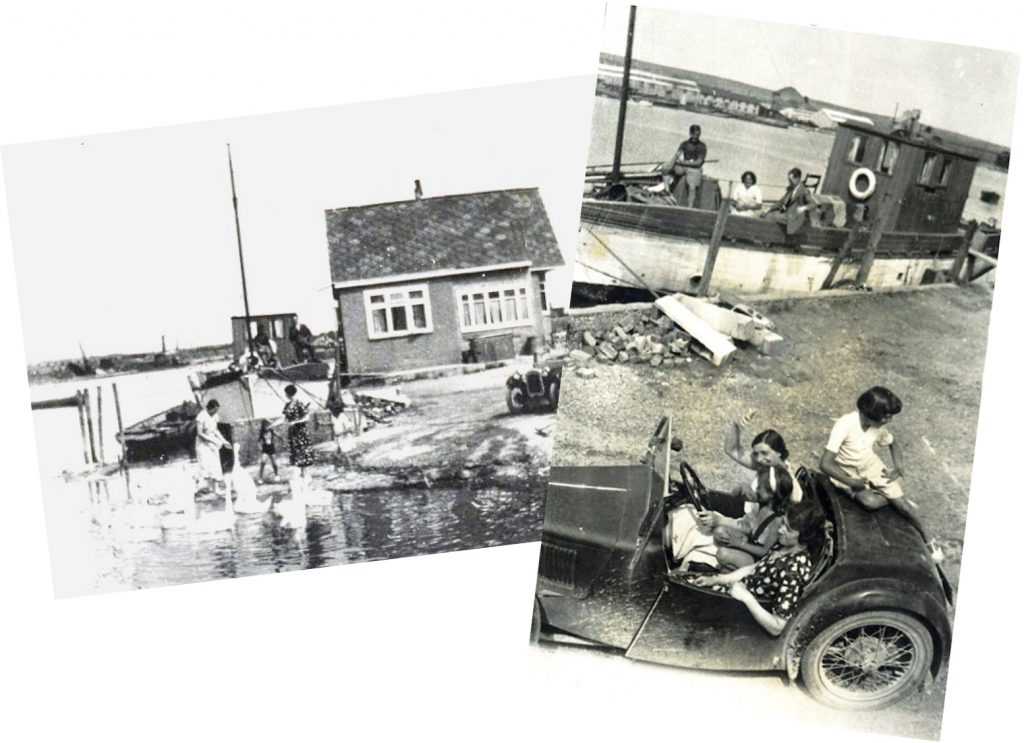
Yes. And then you got married and you lived on a houseboat. That’s right.
(11:28 – 11:49)
And that was called… What was it? Speedwell. Speedwell. And that was at… Where did it lay, to start with, before it came to the beach? Oh… What was it called? Oh, it came… Where the Yacht Club is, wasn’t it? Where the Yacht Club is.
(11:49 – 11:58)
Was it there? Where it was laid. Yeah. Were you in Shoreham? Was the birth in Shoreham? No, it laid at the canal first.
(11:59 – 12:03)
Oh, I see. At the canal, and then it came up… And then they brought it up to Shoreham. I see.
(12:03 – 12:07)
And then they brought it over to the beach. That’s right. And it was in Riverside Road, wasn’t it? Yes, that’s right.
(12:08 – 12:26)
And then you had… And then your husband built a bungalow, which was called Melbourne. So the boat, the yacht was behind the boat, and you used to spend your summers on the boat, didn’t you? That’s right. You had two daughters.
(12:26 – 12:29)
Yes. Yes. They were both born in Shoreham.
(12:31 – 12:48)
And… What was Shoreham Beach like then? No, the roads weren’t made up, were they? Oh, no, no. Yes. And… Oh, they asked me here to ask you if you can remember your first job.
(12:49 – 13:01)
Can you remember…? When I left school. Yes. And how much did you earn? I pushed a baby boy around the town for 18 pence a week.
(13:01 – 13:06)
Oh, I see. Yes. Now, then.
(13:07 – 13:29)
How… What about the doctor? They asked me over here to ask you about the doctor. If you were ill, did they call a doctor in? Did you have to pay him? Um… You can’t remember? No, I don’t remember. No, no.
(13:30 – 13:40)
And… Did you ever… You didn’t have to go to hospital as a little girl, did you? No. Did you have your time? In hospital? Yes, yes. I went to hospital.
(13:40 – 14:14)
I see. Now, um… So, you lived on Shoreham Beach and it was from… When did you move to Shoreham Beach? 1922? When you were married? I think so, when we were married. Must have come over here about 1922, didn’t you? And the milkman used to come round with the milk cart, didn’t he? Push the milk cart.
(14:14 – 14:16)
Push the milk in a can. Yes. And bail it out.
(14:16 – 14:22)
Yes, and bail it out. Yes. Did you have electricity on the boat? Oh, no.
(14:22 – 14:25)
No. How did you… Paraffin. Cook with a paraffin stove.
(14:25 – 14:35)
Yes, yes. And, um… Let me think. What else? What did you do for light then? Did you have paraffin lamps to see by? Paraffin lamps.
(14:35 – 14:46)
To see by, yes. Yes. And then when you had the bungalow, did you have gas then? Did you have gas? In the bungalow? A gas cooker? Wait a minute.
(14:50 – 14:53)
Yes, we had gas. And water? Water. Water.
(14:53 – 15:15)
Yes. And then everything went along quite nicely, and then in 1936 your husband died, didn’t he? He died at the age of 37 in 1936. And then in 19… Then you moved to another bungalow in Riverside Road called Little Dean.
(15:15 – 15:34)
And then in 1939 the war started, didn’t you? And you had two young girls to bring up during the war. And, um, you had an evacuee, didn’t you? A London evacuee? Rita Graceman, her name was. You had her for a year? Was she with you for a year? Yes.
(15:34 – 15:56)
Yeah, yeah. And then, um… And then you had… The war was on. And when your daughters went to school, they had to go across the footbridge, and they rode to their school in Kingston Lane, and having been to Ham Road and Victoria Road.
(15:57 – 16:09)
Now let’s see what else I can ask you. Then in 1940 you had… How long a notice did you have before we had to get off the bridge? Was it 24 hours? Yeah, not sure. 24 hours.
(16:09 – 16:34)
24 hours, yes. And, um… Then they came along, they said, you’ve got to be out of your house in 24 hours, didn’t they? And you went to… Somebody told you there was a house to rent in the town, so you went to rent a house in the town. And they had to move you and your furniture, and you had to leave your coal behind, didn’t you? To sell it away.
(16:34 – 16:37)
That’s right, to sell it away. Yeah, that was dreadful. I’d leave my coal behind.
(16:37 – 16:44)
But he went and took it to his house. Oh, did he? Oh, yes. Because you couldn’t get coal.
(16:44 – 16:59)
It was rationed, wasn’t it? And then, um… Now then. When you were a young girl, we’ll go back to when you were a young girl, were there any buses in Tentenden? Horse bus. Horse bus.
(16:59 – 17:08)
My brother drove that. Horse bus, yes. And was there a train? Eh? Were there trains? Oh, yes, Cantonese Sussex Railway.
(17:08 – 17:22)
Cantonese Sussex Railway, yes. And did you have a bicycle? No, I didn’t have a bicycle, so it’s, uh… Later on, I did. Yes, yes, yes.
(17:22 – 17:35)
All right, well, they want you to… They want you to go back to your life events. Now, we know when you were born. You were born in 1896, and were you christened at St. Mildred’s? St. Mildred’s, yes.
(17:35 – 18:14)
In Tentenden, yes. And you went to one same school all your life, and then you went into, um… Into, uh… Um… Service. Went into service, and then you went to Australia and came back, and then you met your husband in Shoreham, and you got married at St. Julian’s at Southwick, and you… After four years, you had one daughter, and then you had another daughter, two girls, and then life was very hard for you because it wasn’t all the things there are today, because your husband died when the children were very young.
(18:15 – 18:49)
Now, in middle age, you had to work pretty hard, and then you retired when you were about 70, didn’t you? That’s right. Yes. Um… Well, that’s, I think… And then your… Your two daughters married, and you had four grandchildren, and then they got married, and you now got nine great-grandchildren, haven’t you? Yes.
(18:50 – 18:59)
They’ve done very well. They’ve done very well. And, uh… I’ll stop it now, and if I can think of anything else, I’ll…
Transcribed by TurboScribe.ai.